
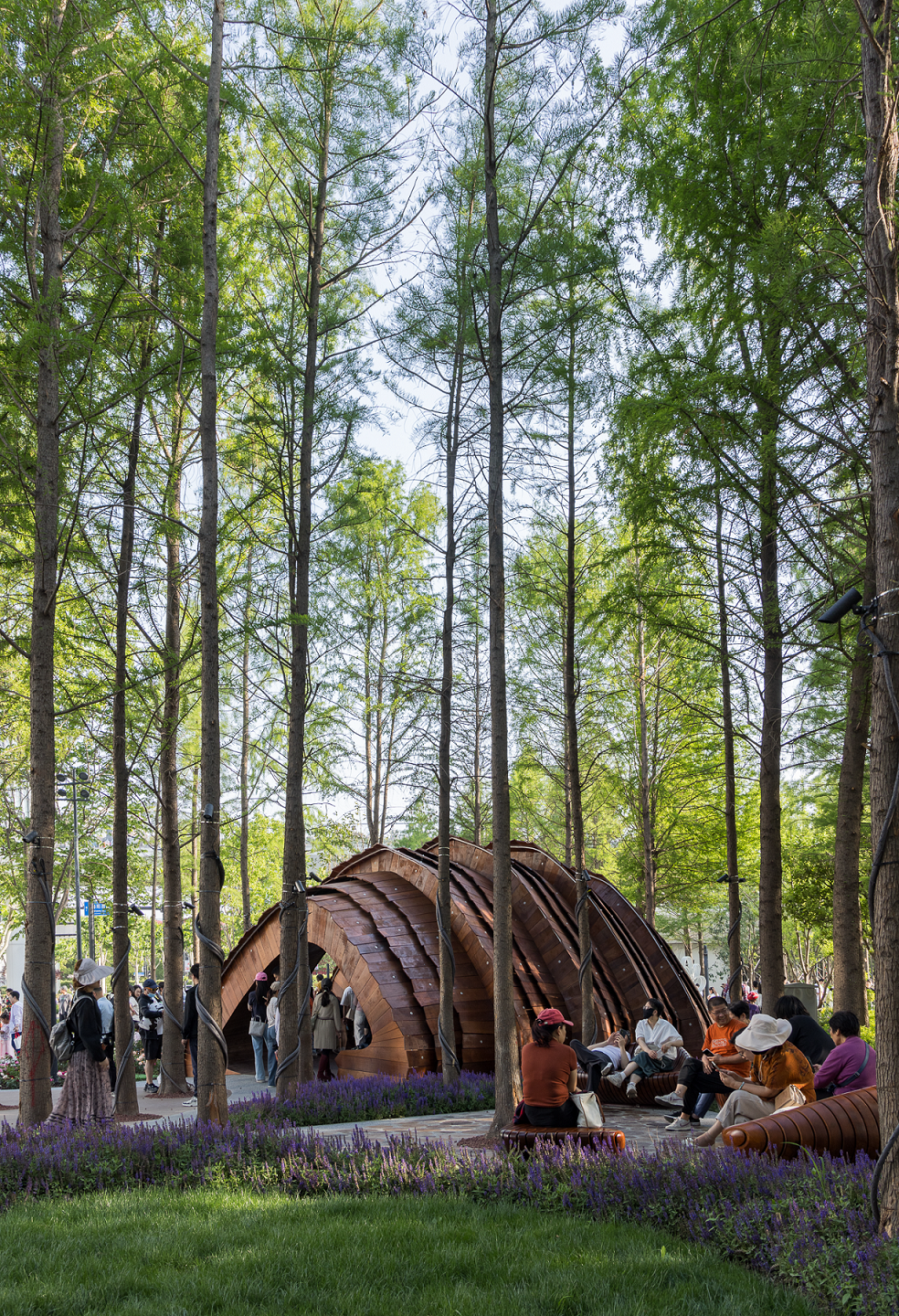
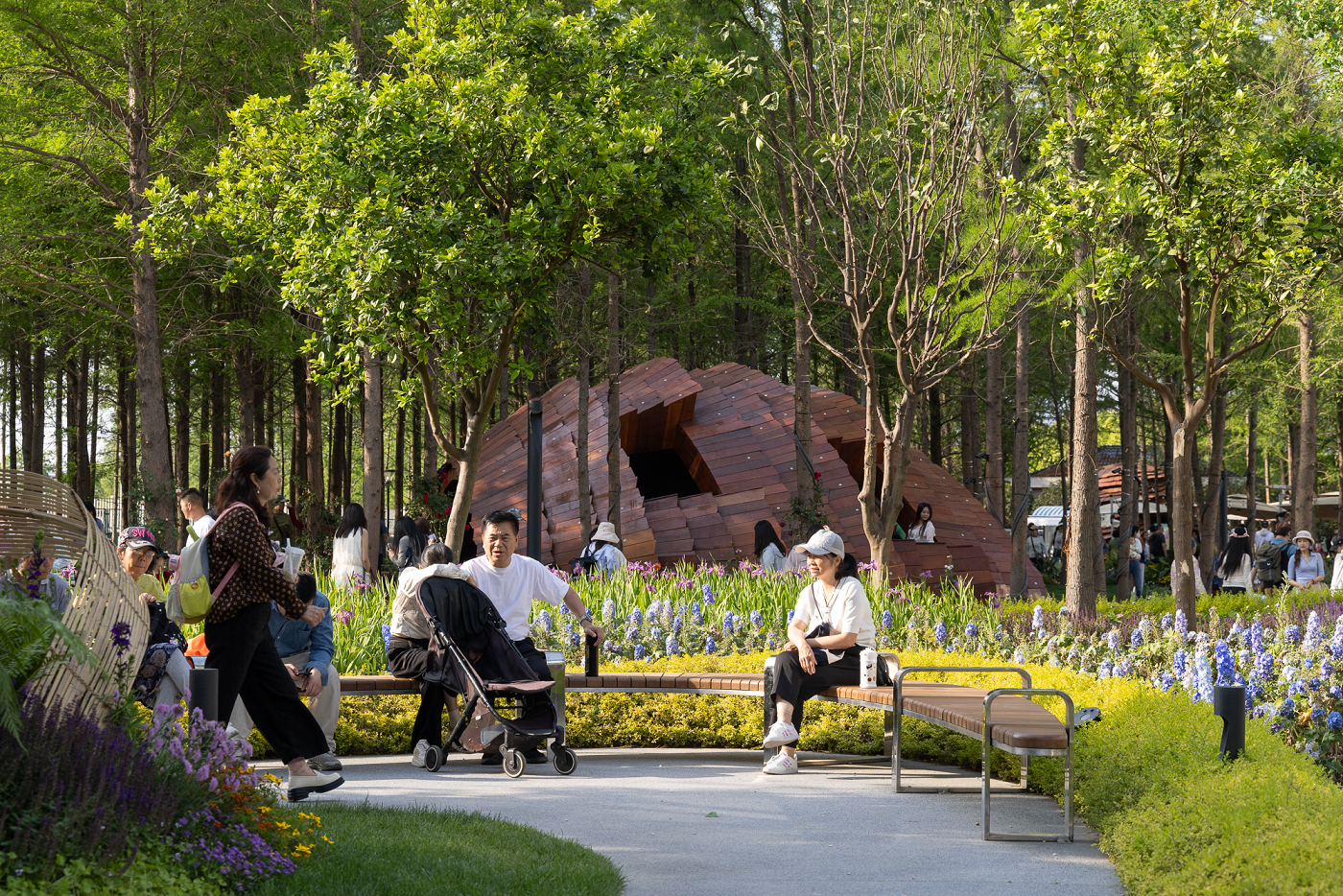
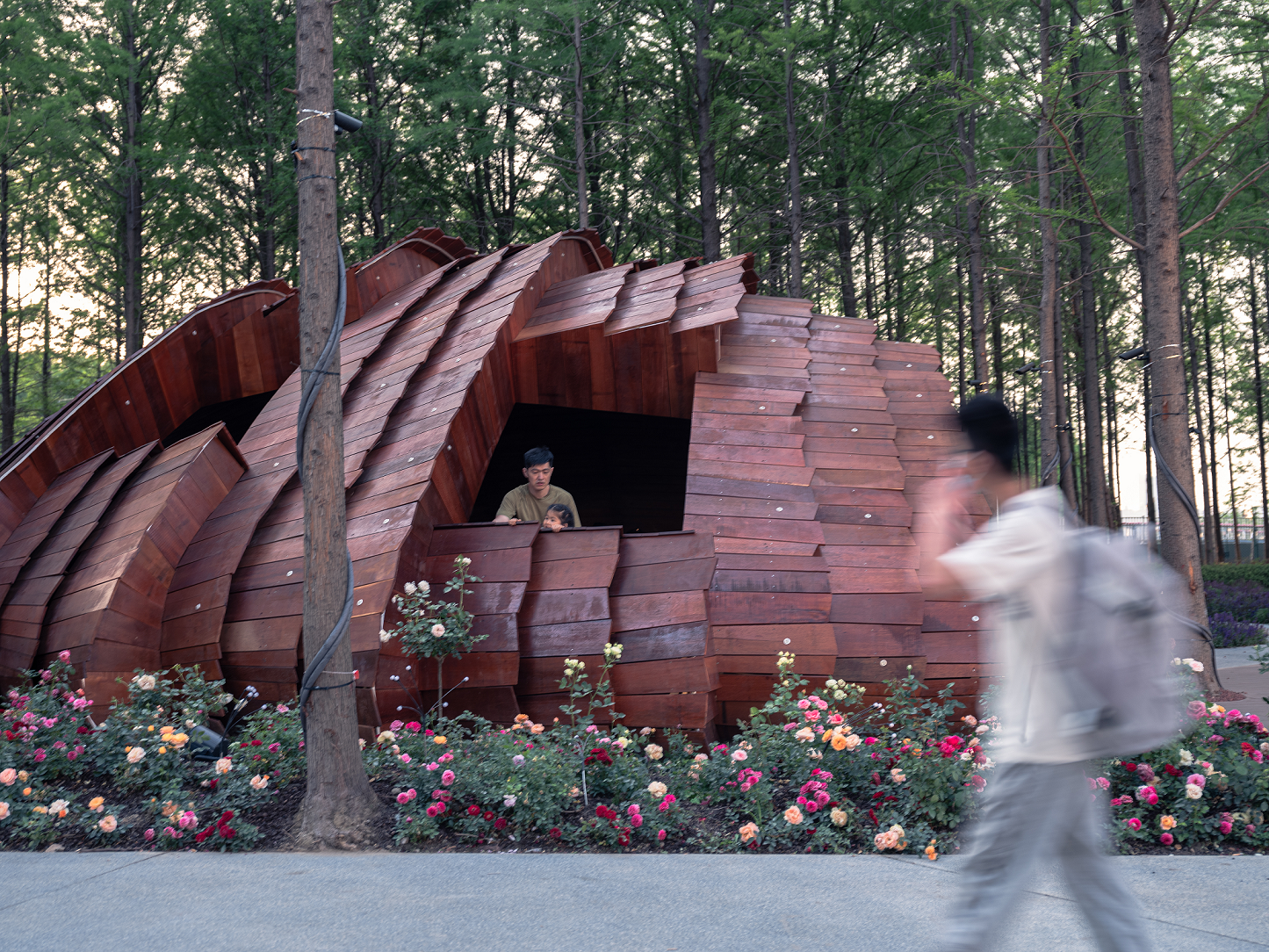
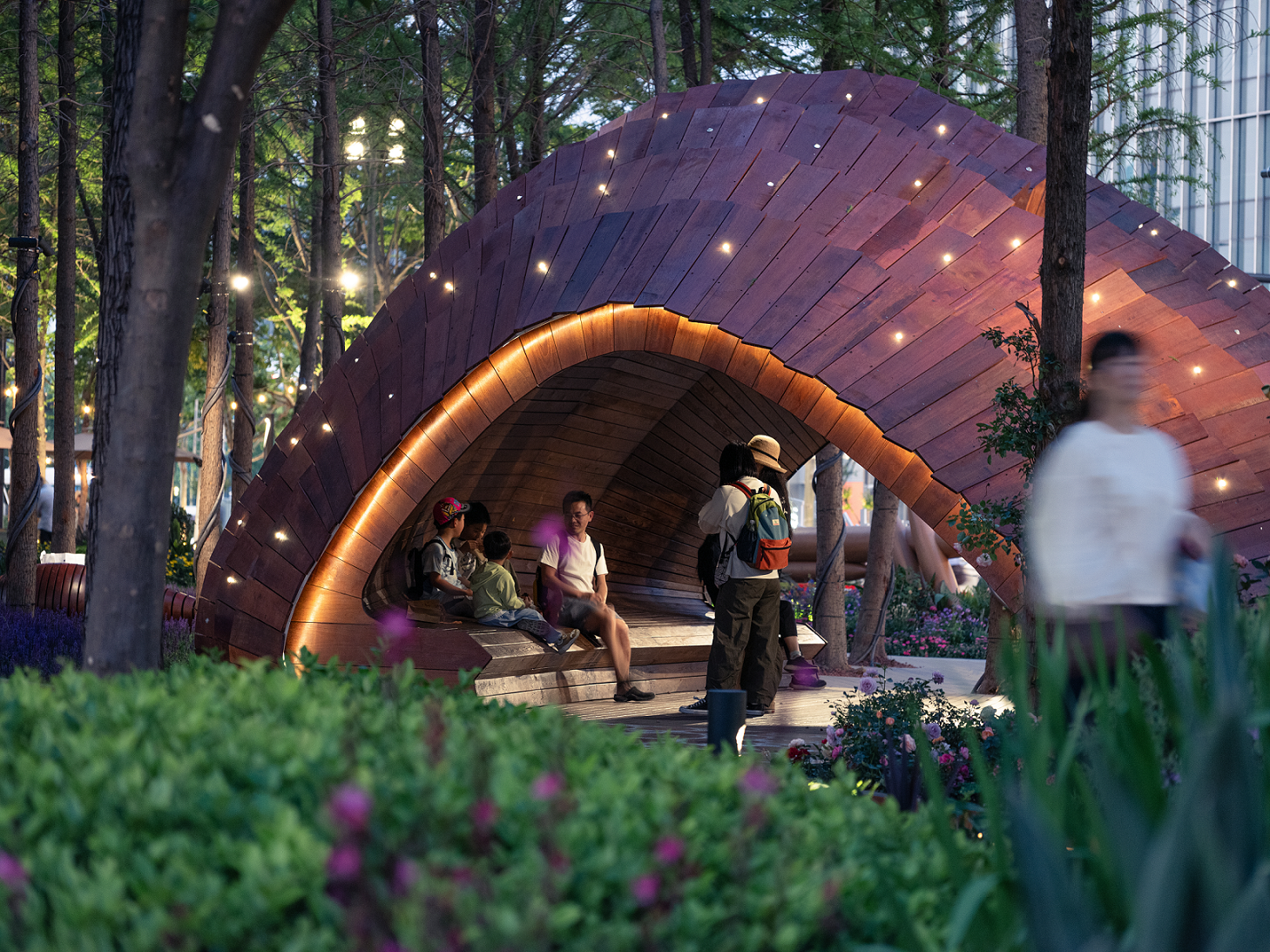
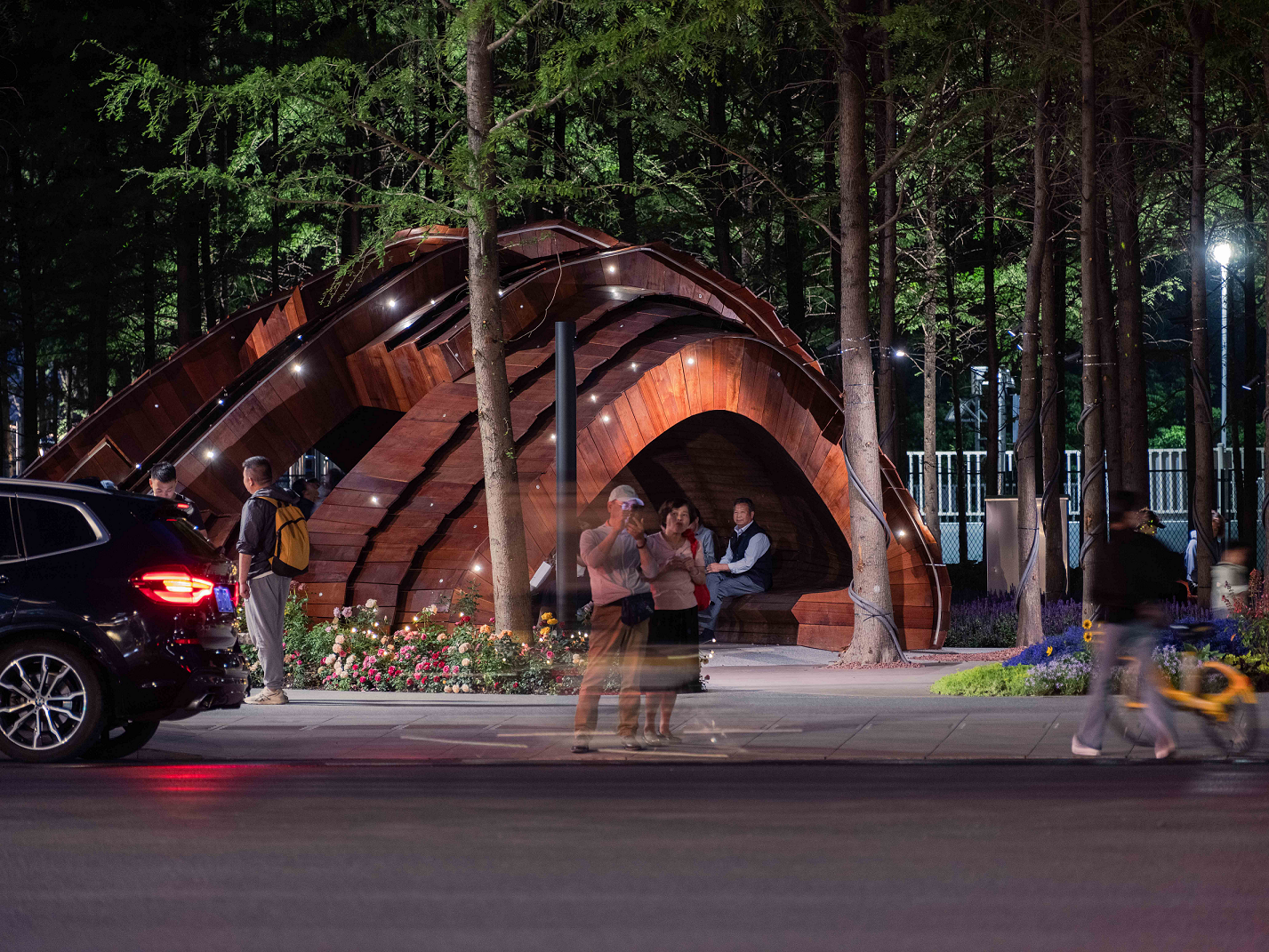
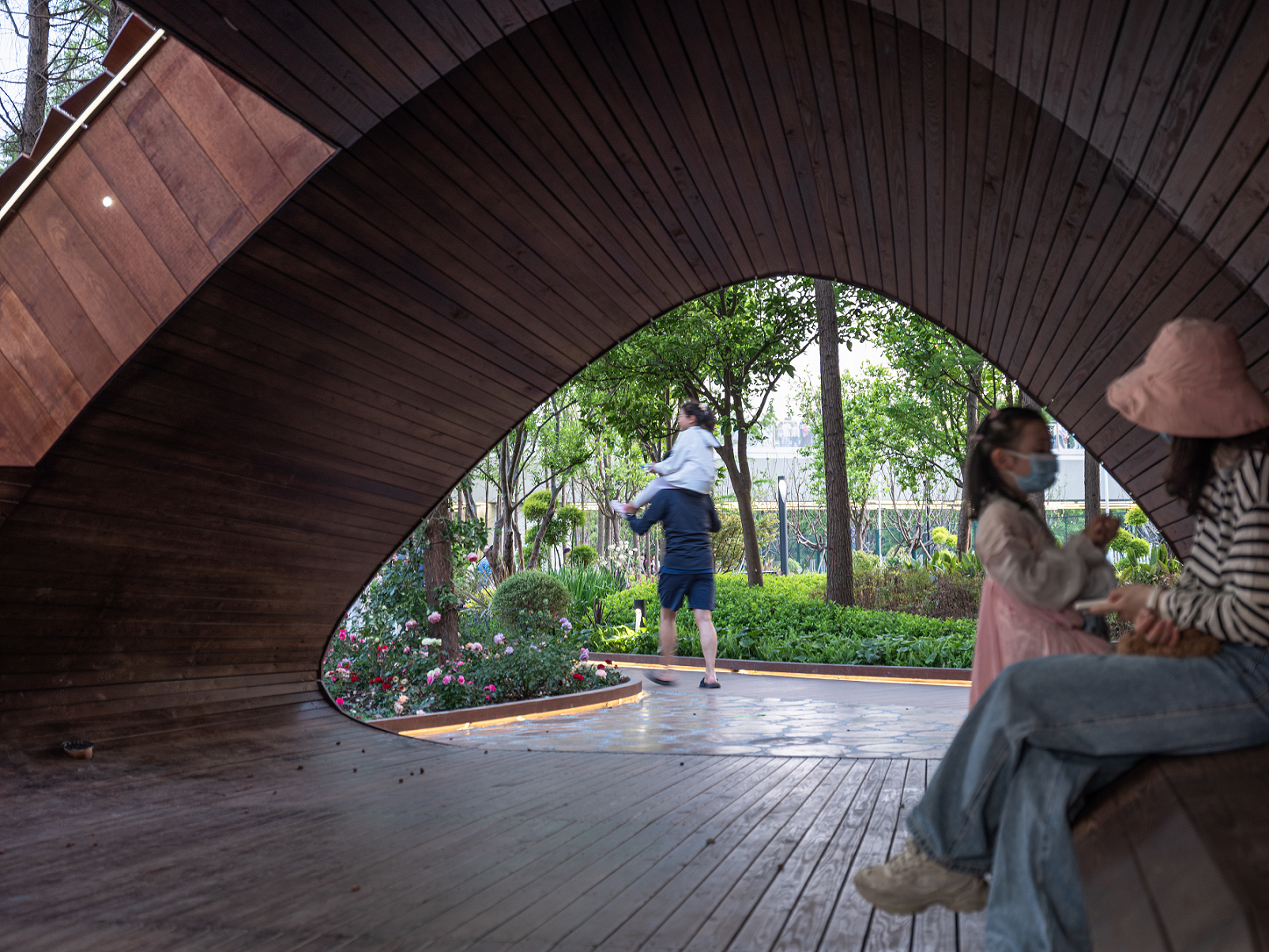
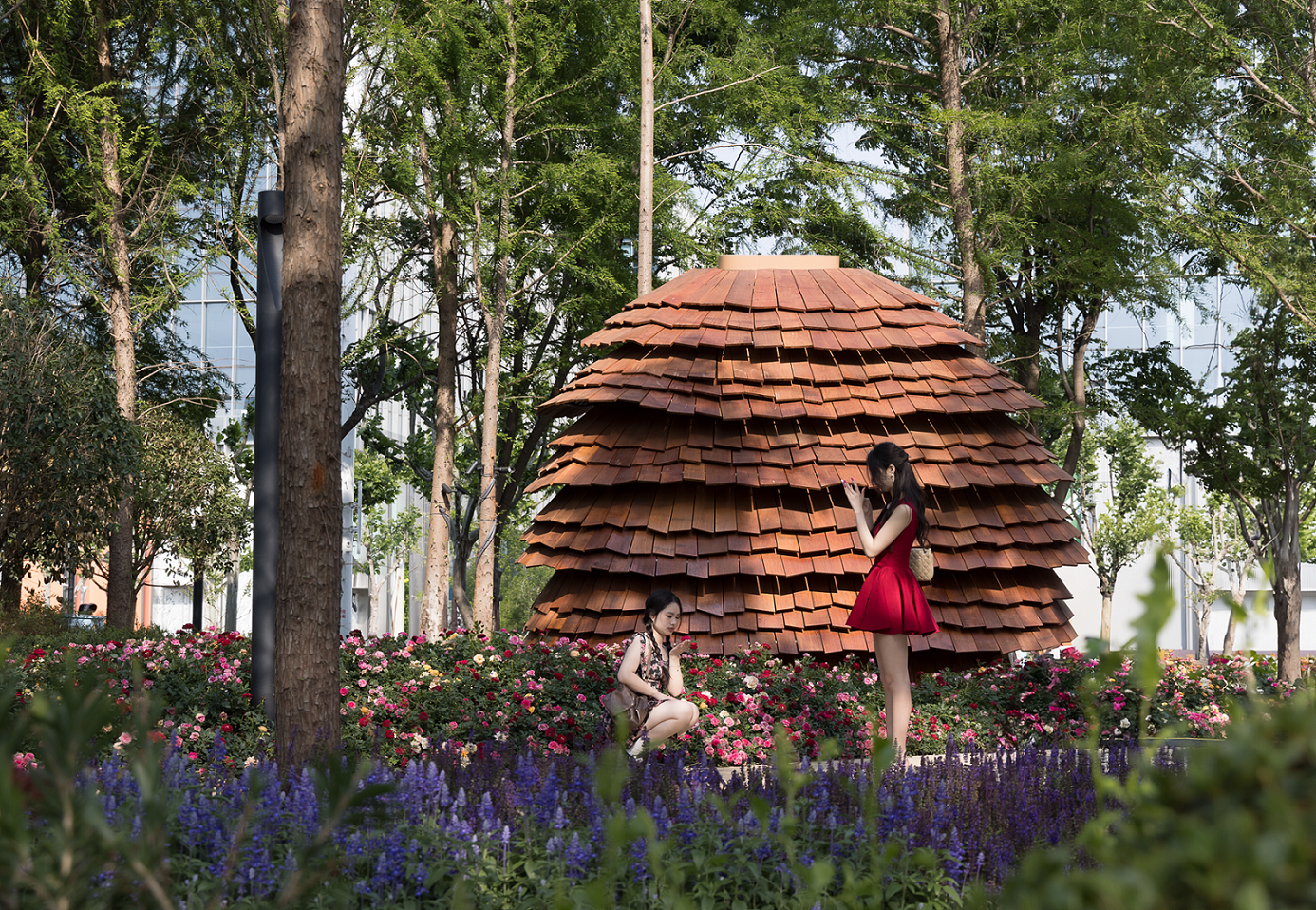
The preserved bald cypress grove at Shanghai’s Huangpu River waterfront becomes the starting point of design. Two pavilions reinterpret fallen cypress cones, transforming their organic forms into timber shelters for rest and gathering.
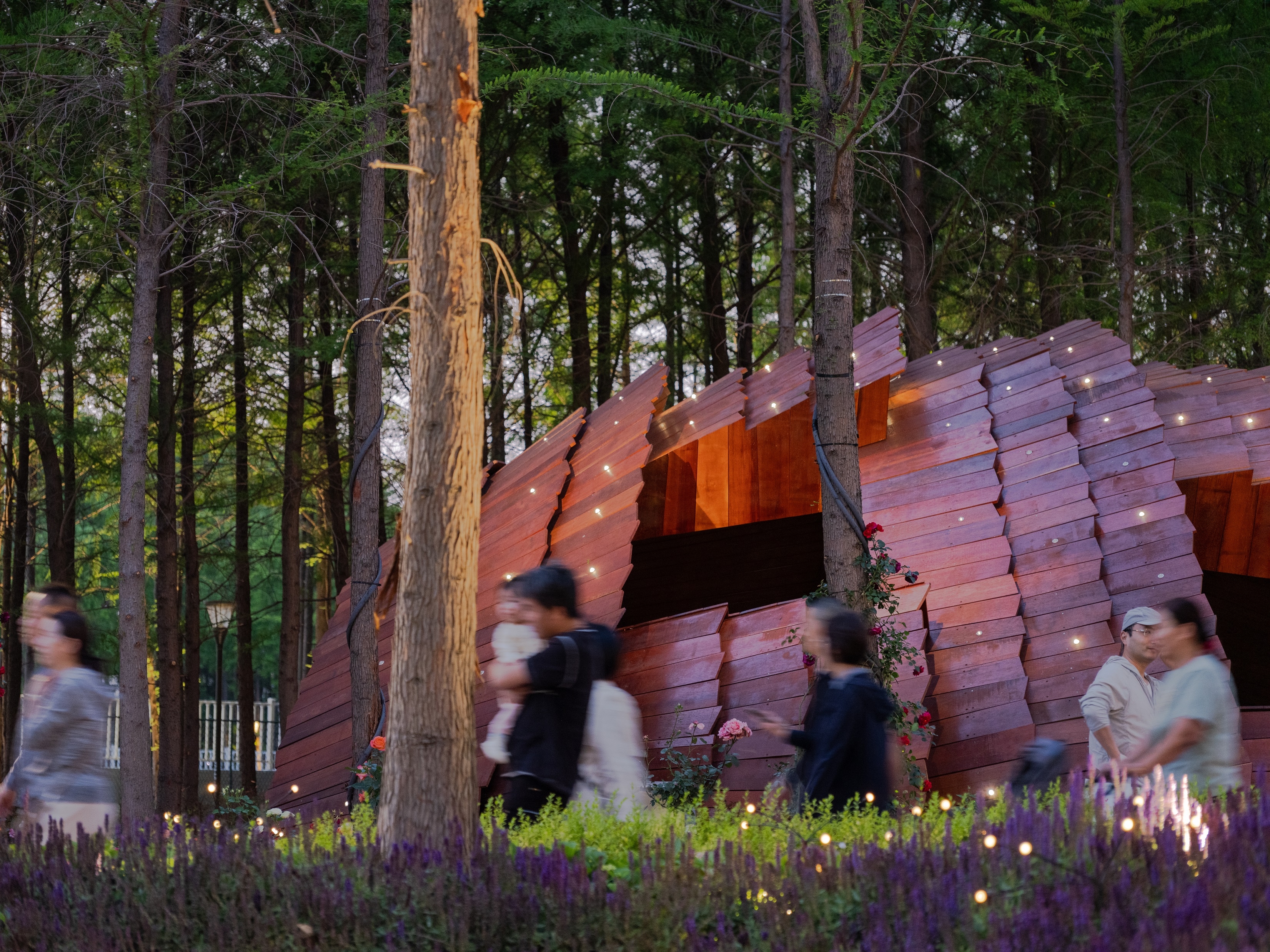
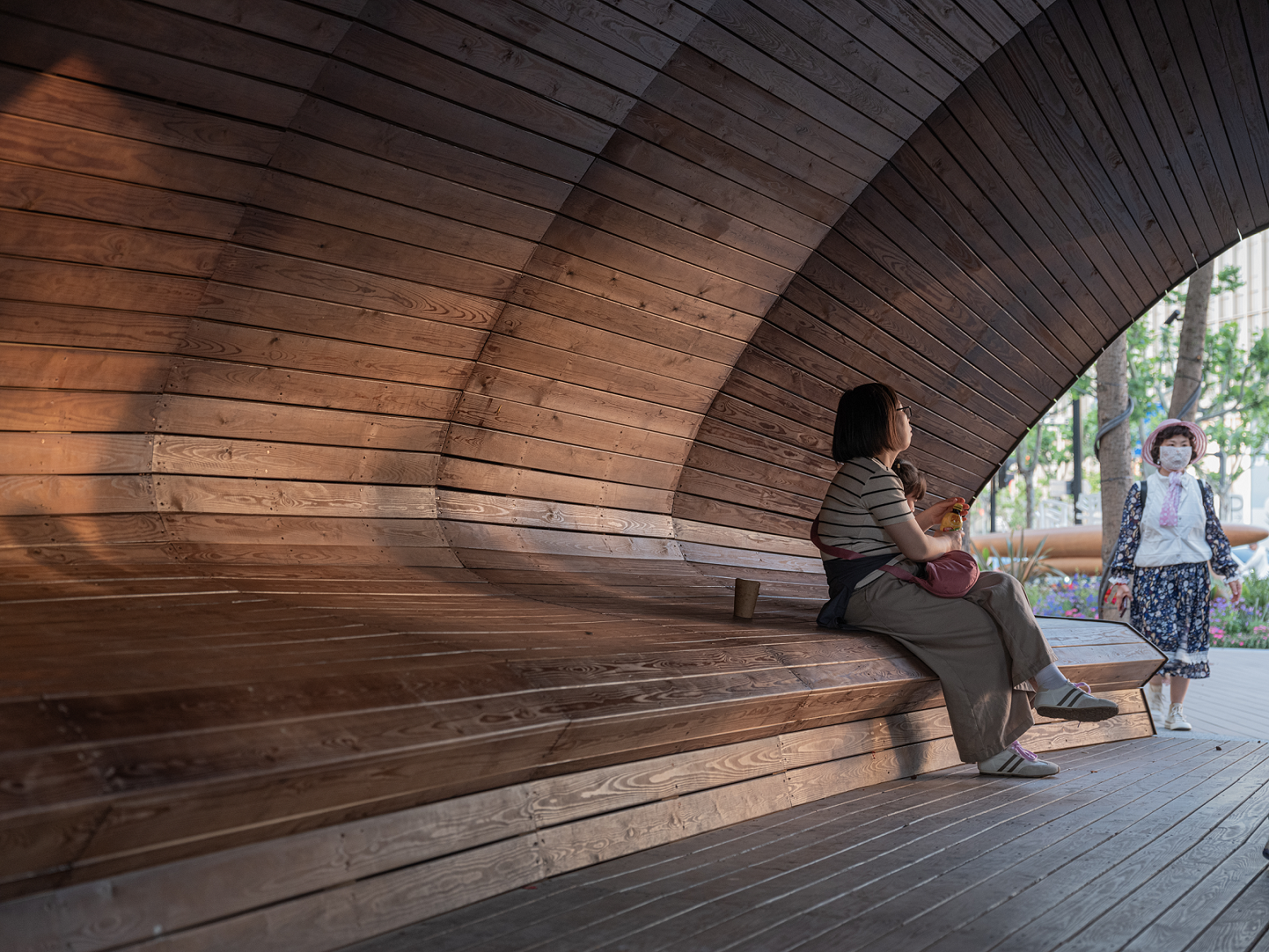
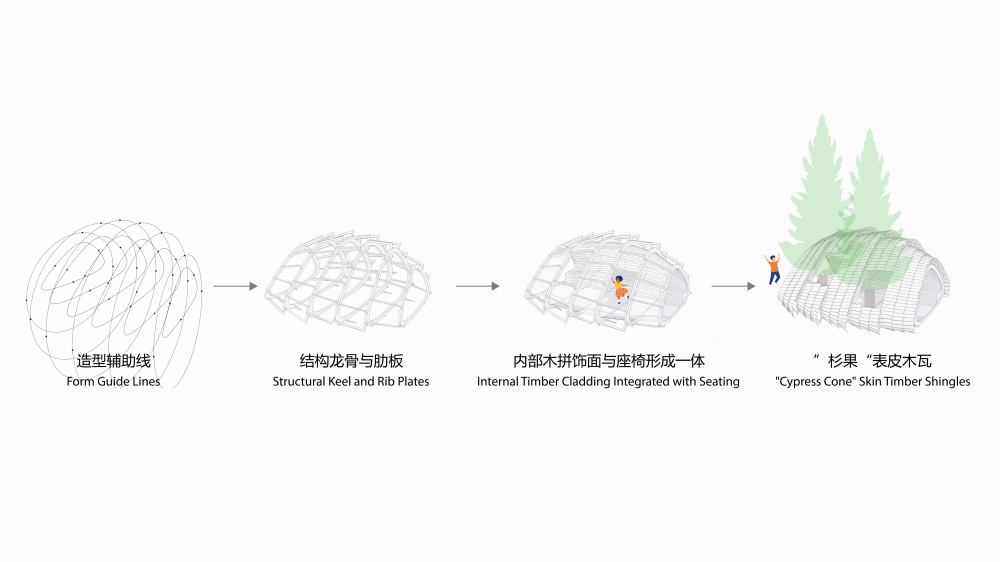
The larger cone (3.8m high, 8.5m wide) functions as a double-ended timber corridor. Refined parametrically, several circular ring beams? are strung together by linear keels to form the overall framework. Inside, tightly jointed preservative-treated timber planks create a smooth curved surface, with the lower section of this curve contoured to form a continuous bench. Externally, Merbau timber is crafted into multi-layered, staggered wooden shingles of varying lengths, mimicking the textured form of the bald cypress cone. The smaller cone, designed in the same language, functions as a tea pavilion, nestled among the trees.
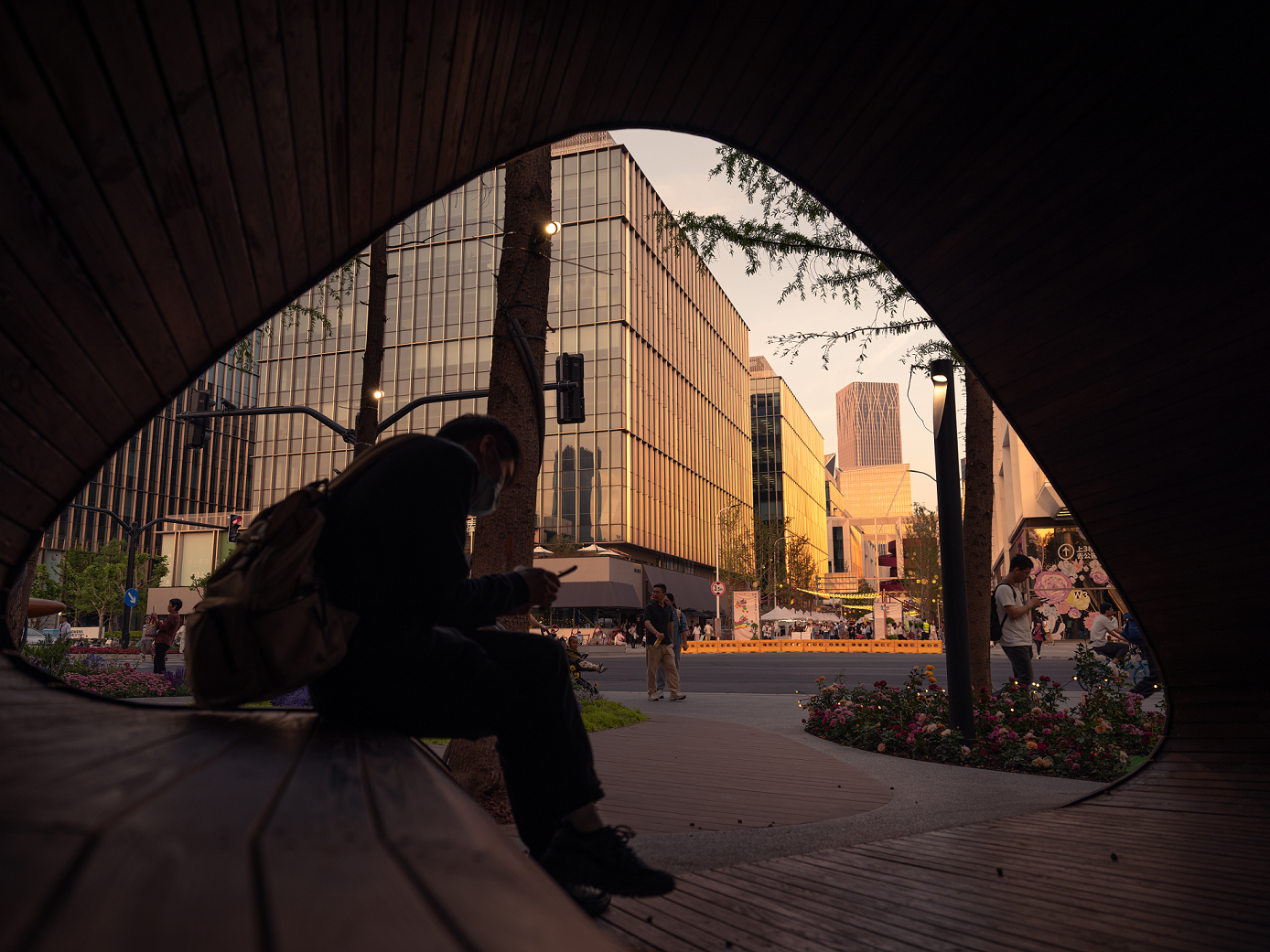
Positioned between the riverside park and the surrounding commercial district, the installations bring ecological memory into contemporary urban life. As the timber weathers to a deeper patina over time, the structures resist being "selfie-ready," instead growing quietly into the forest as a place to pause.