
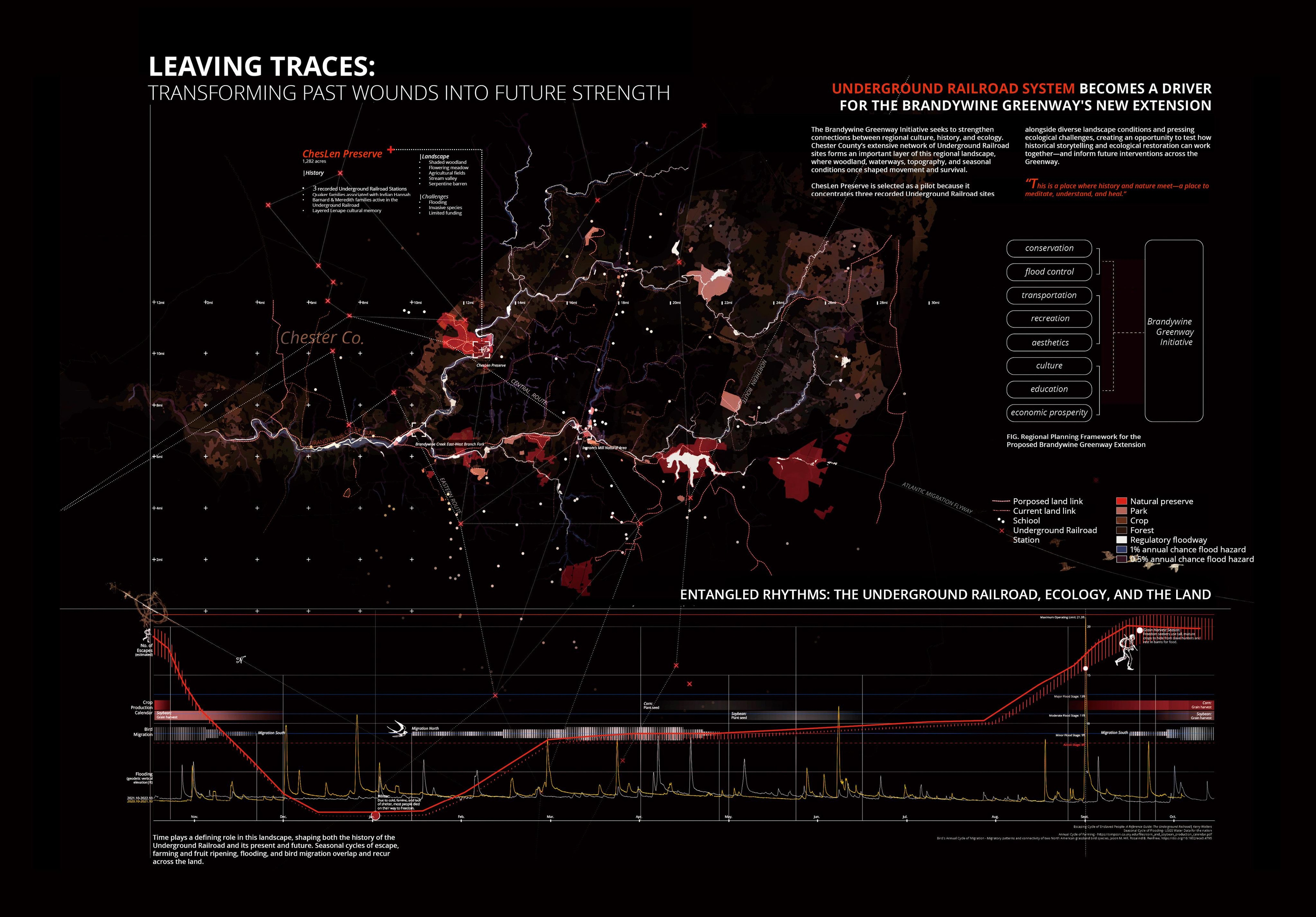
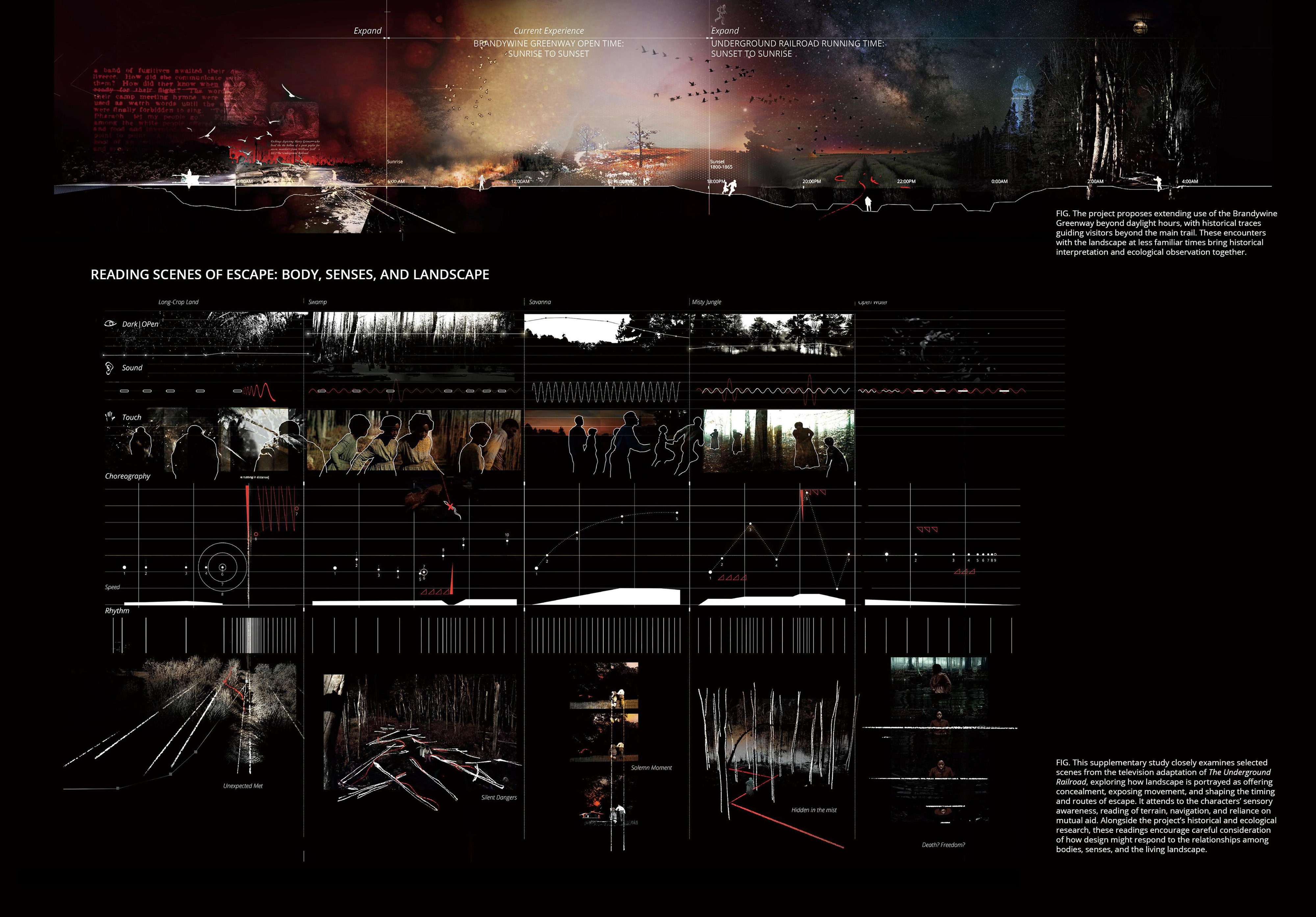
In Chester County, the Underground Railroad's history runs through fields, wooded slopes, and creek valleys. For people escaping slavery, land could conceal, expose, or shape movement; journeys depended on reading it closely and on networks of mutual aid. Today, erosion, flooding, and habitat loss call for shared care.
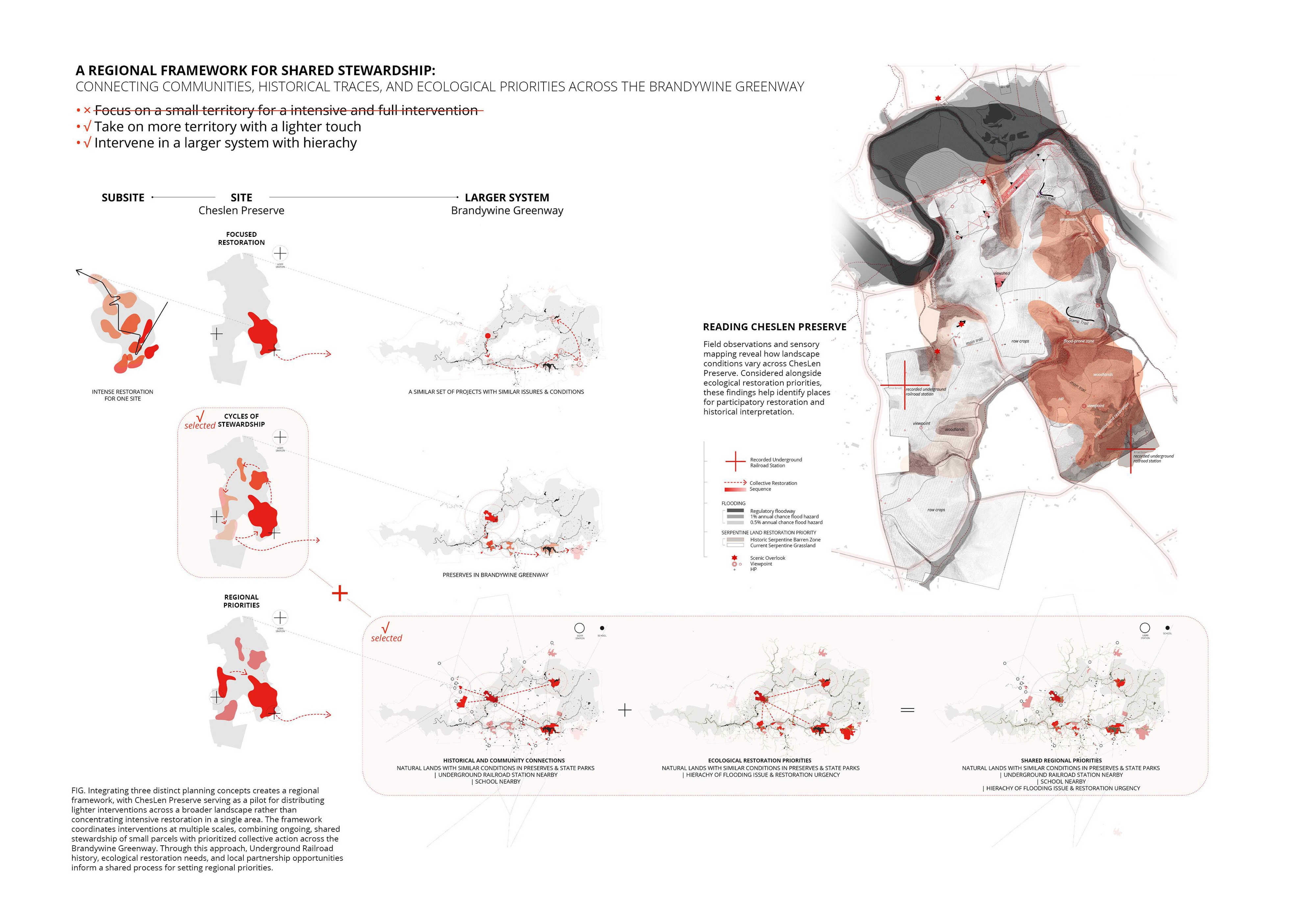
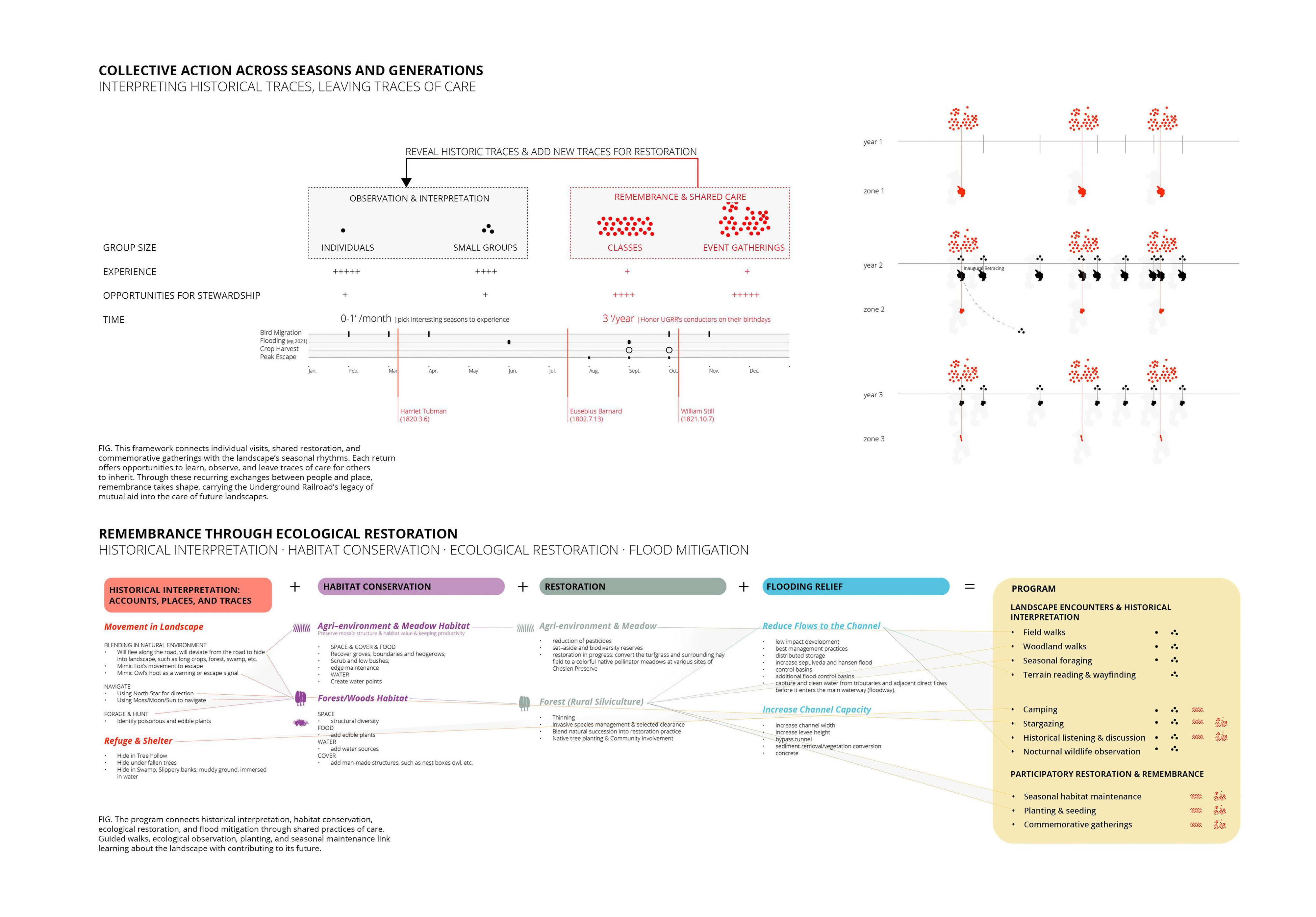
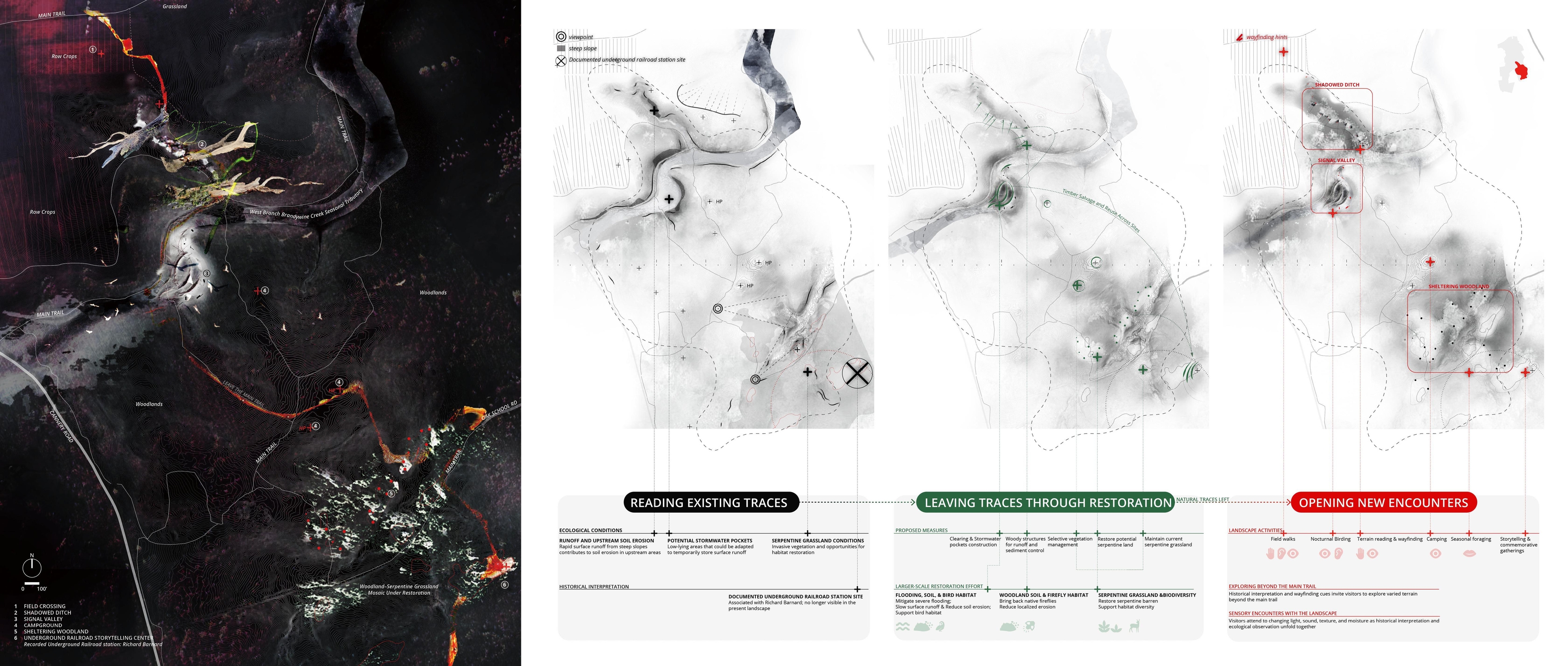
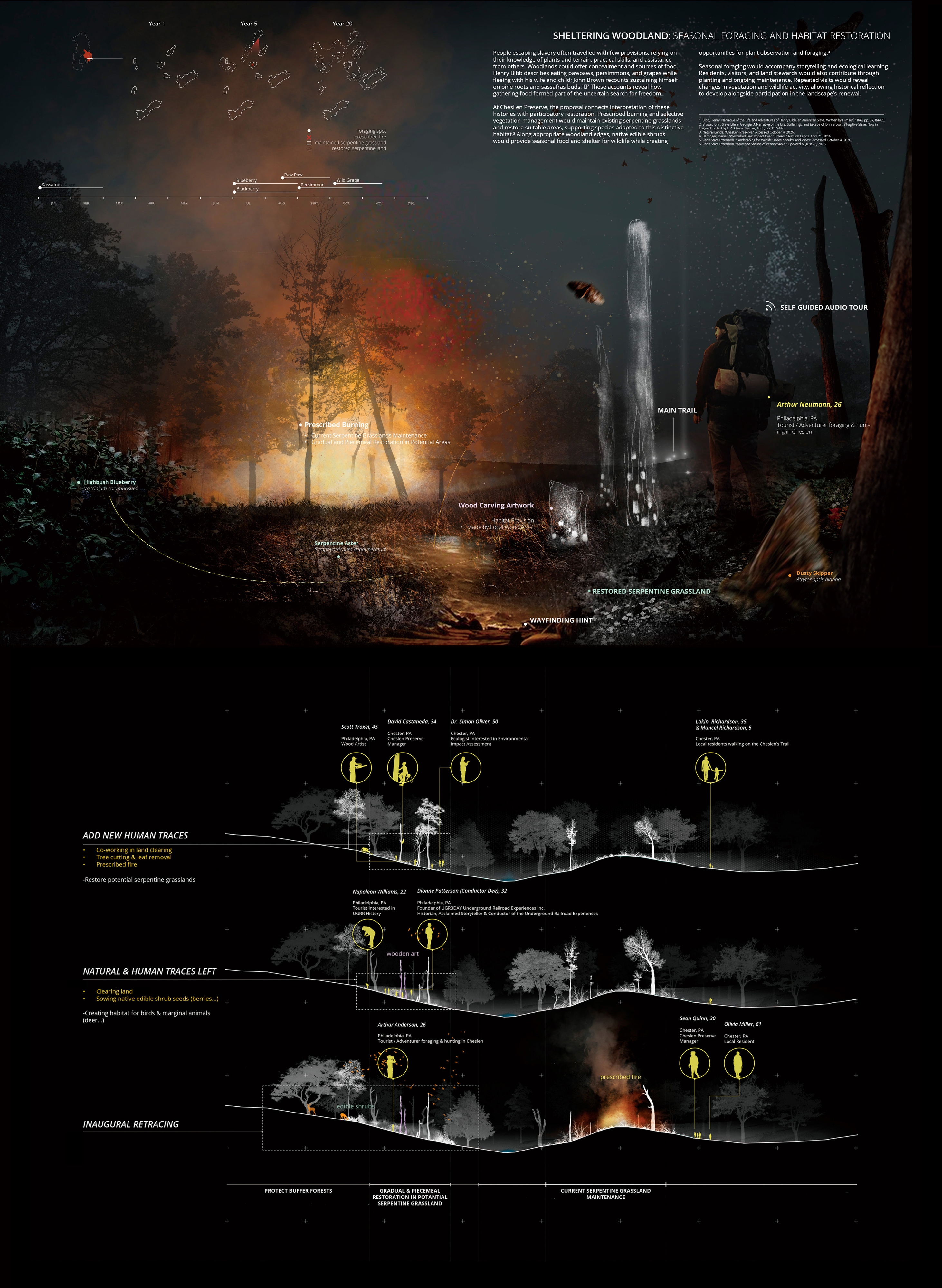
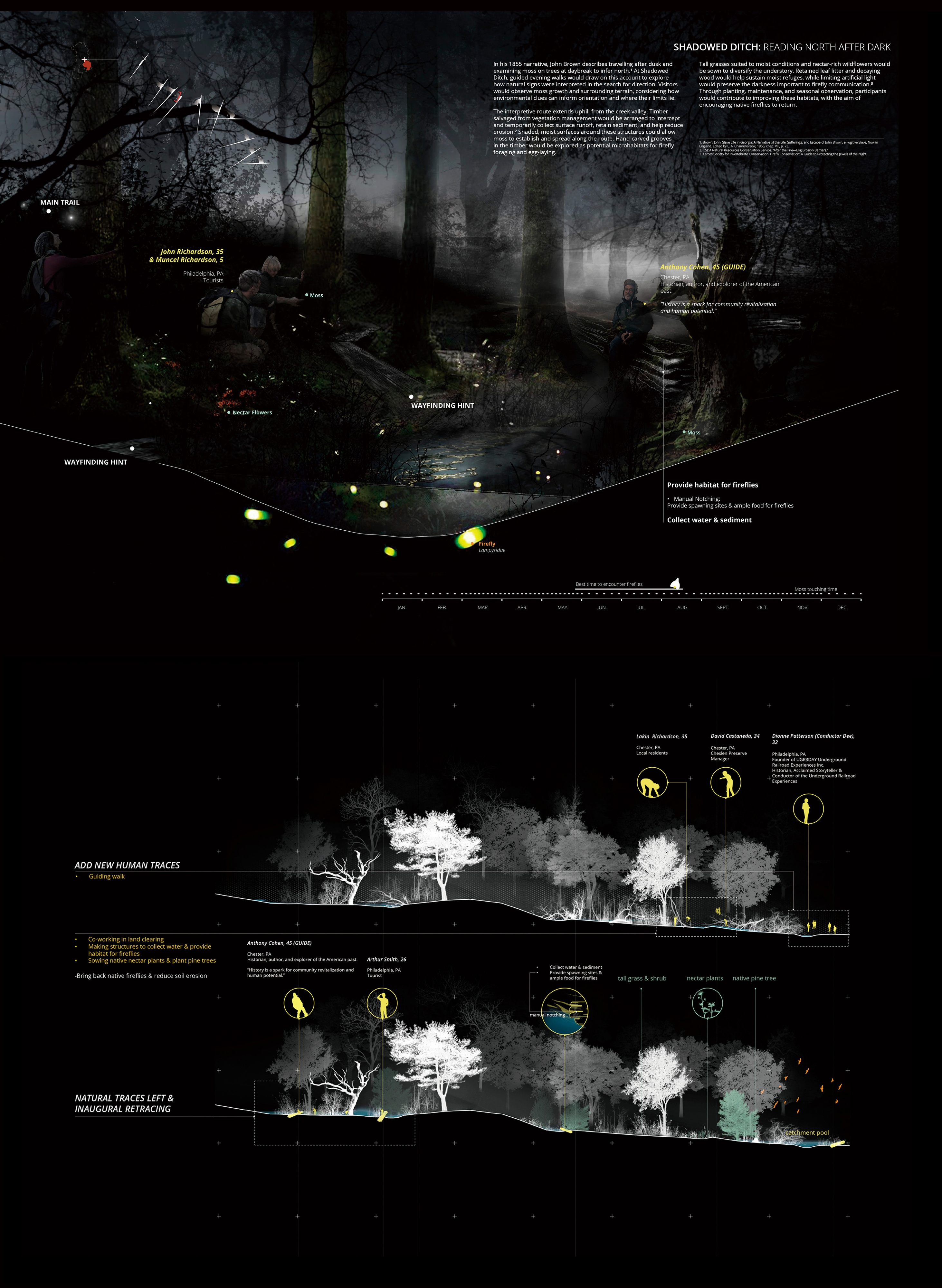
Leaving Traces proposes ecological restoration as a living practice of remembrance. At ChesLen Preserve, a pilot for the Brandywine Greenway, communities would restore serpentine grasslands, create stormwater basins, and build woody structures to slow runoff, trap sediment, and support wildlife.
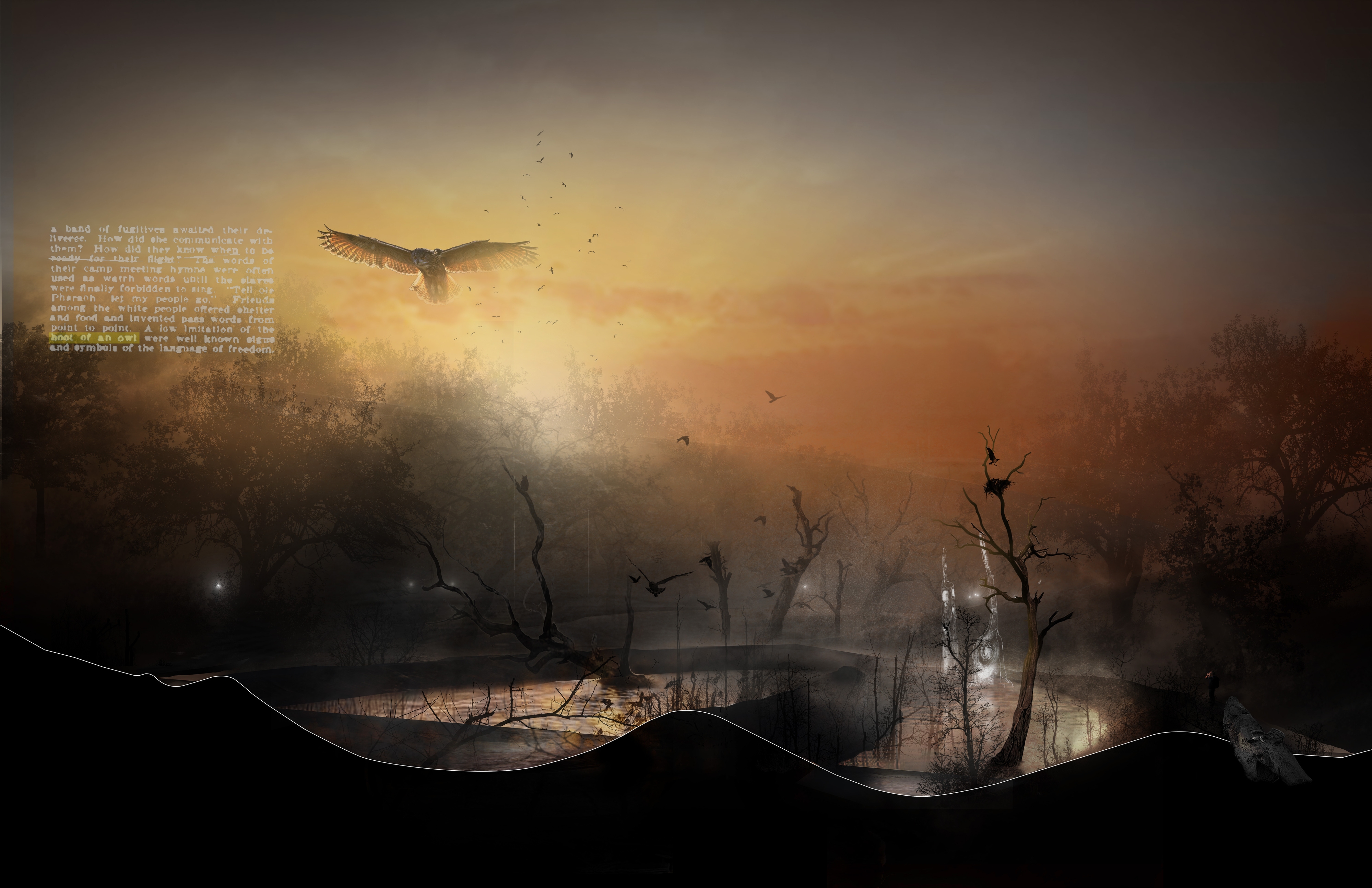
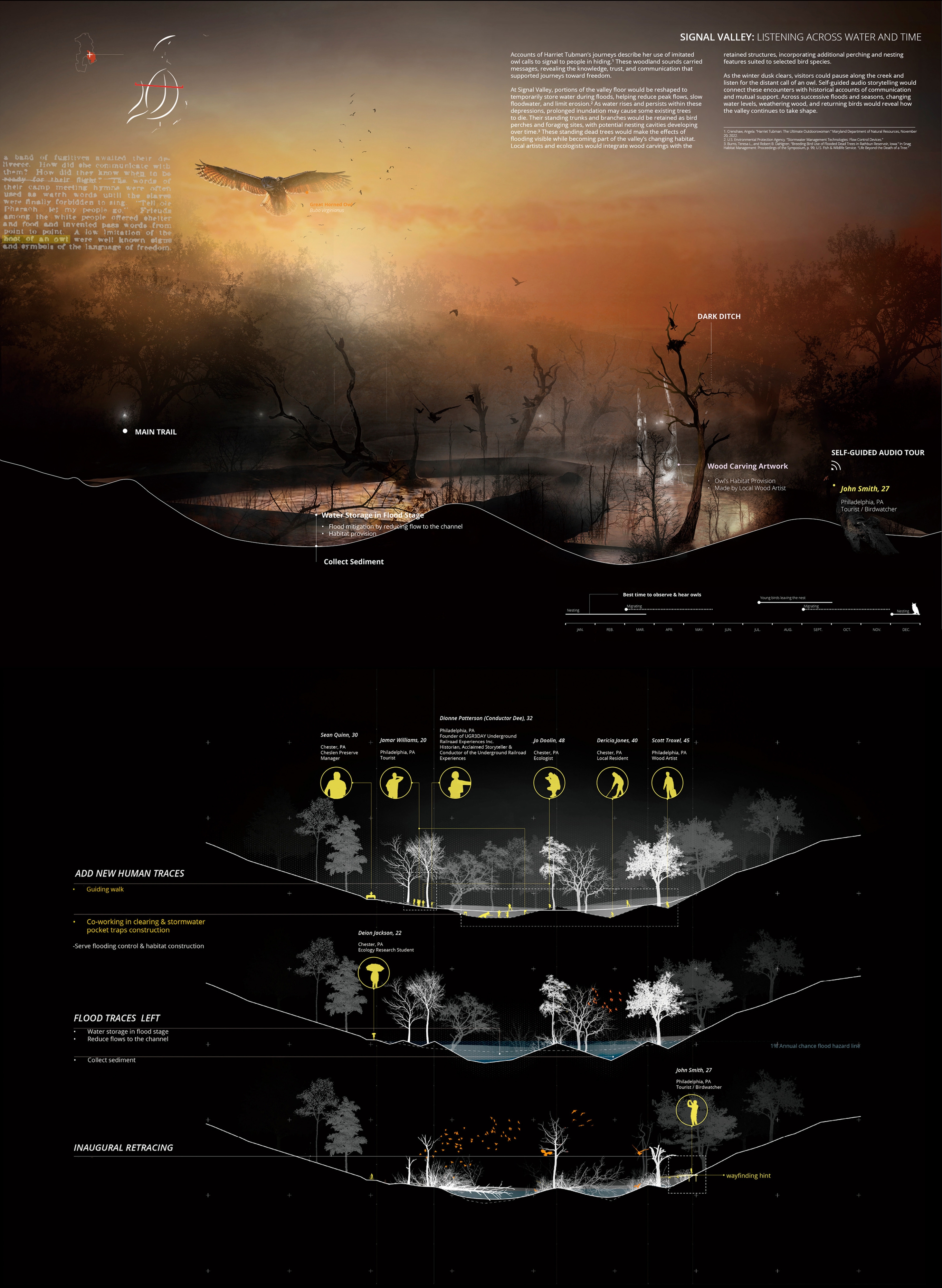
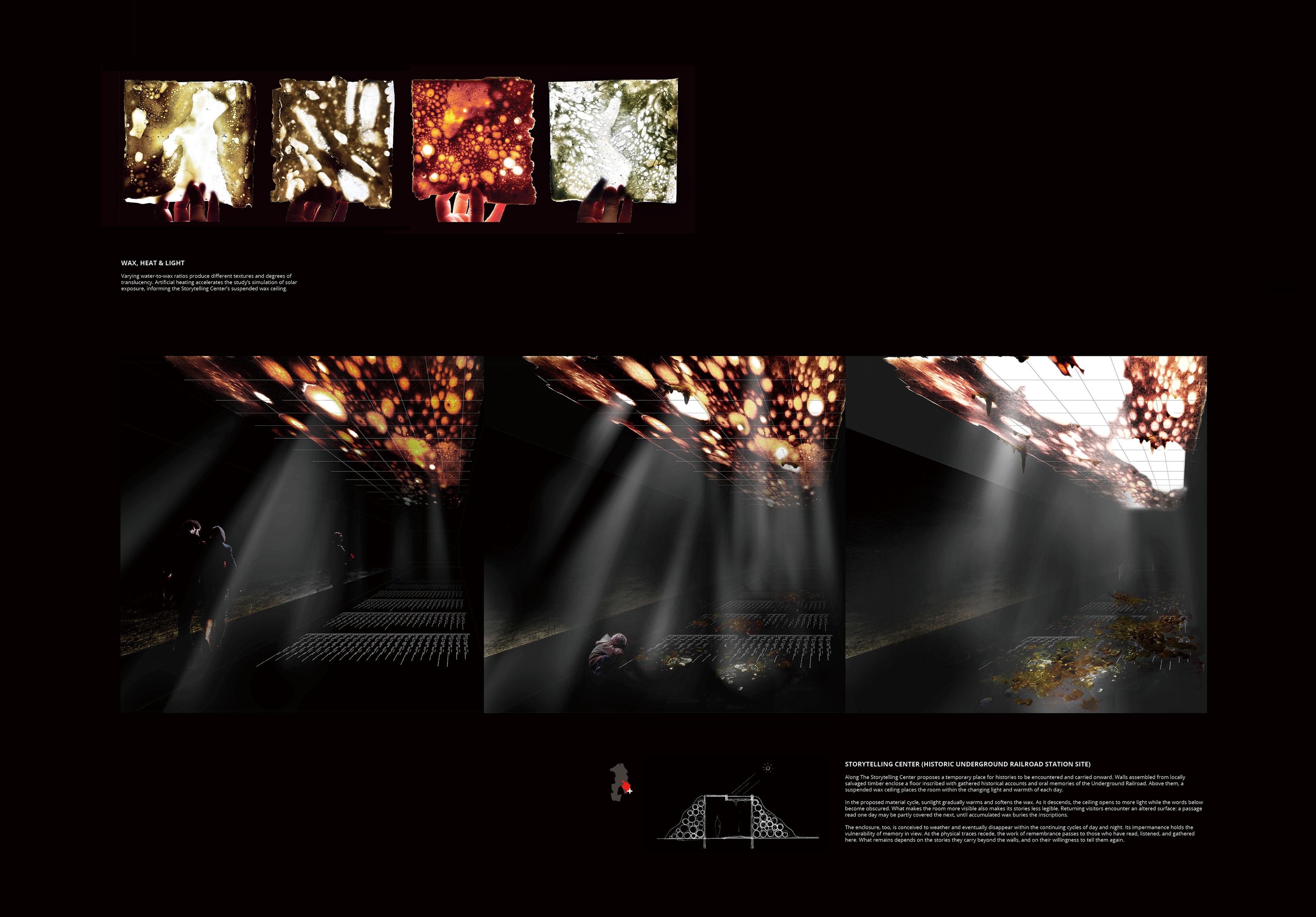
Memory is felt through the body: crossing fields, hearing an owl, watching woods fade at dusk. Guided walks connect these encounters with documented histories of movement, concealment, and survival, bringing history and ecology into dialogue.
Over time, a tended meadow, a planted slope, and a pond holding water record care for others to inherit. Seasonal stewardship and commemorative gatherings invite each generation to return, learn, and contribute. Through repeated exchanges between people and place, the legacy of mutual aid lives on in the care of future landscapes.
Bio Jiewen Hu’s landscape practice and independent design research explore cultural landscapes, collective memory, and material expression, with a focus on how public spaces can support healing and shared experience.
Her work has received honors from ASLA and World Landscape Architecture, a Karl Foerster Commendation in Berlin, and a
category win in the IFLA Global Landscape Architecture Awards.