
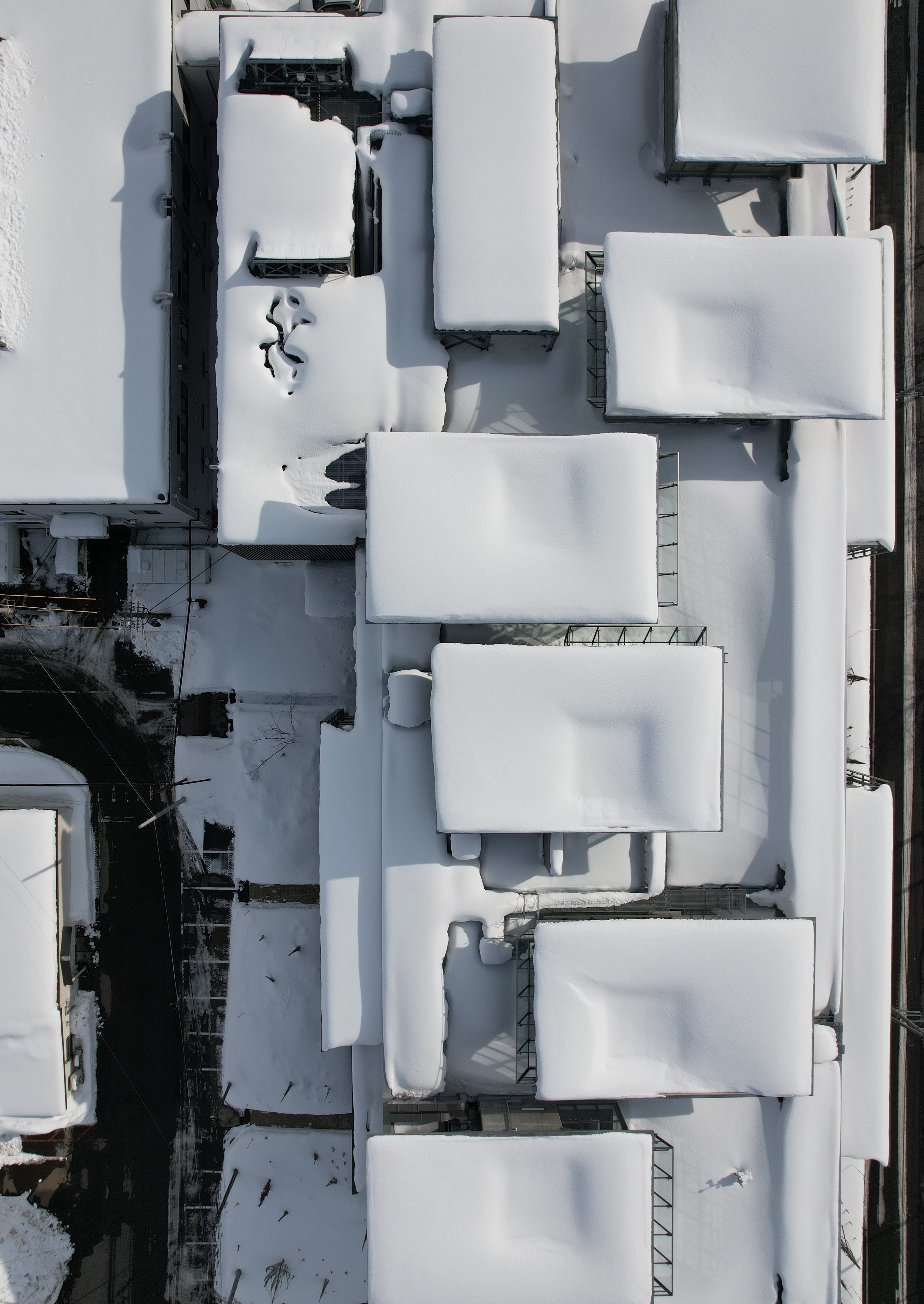
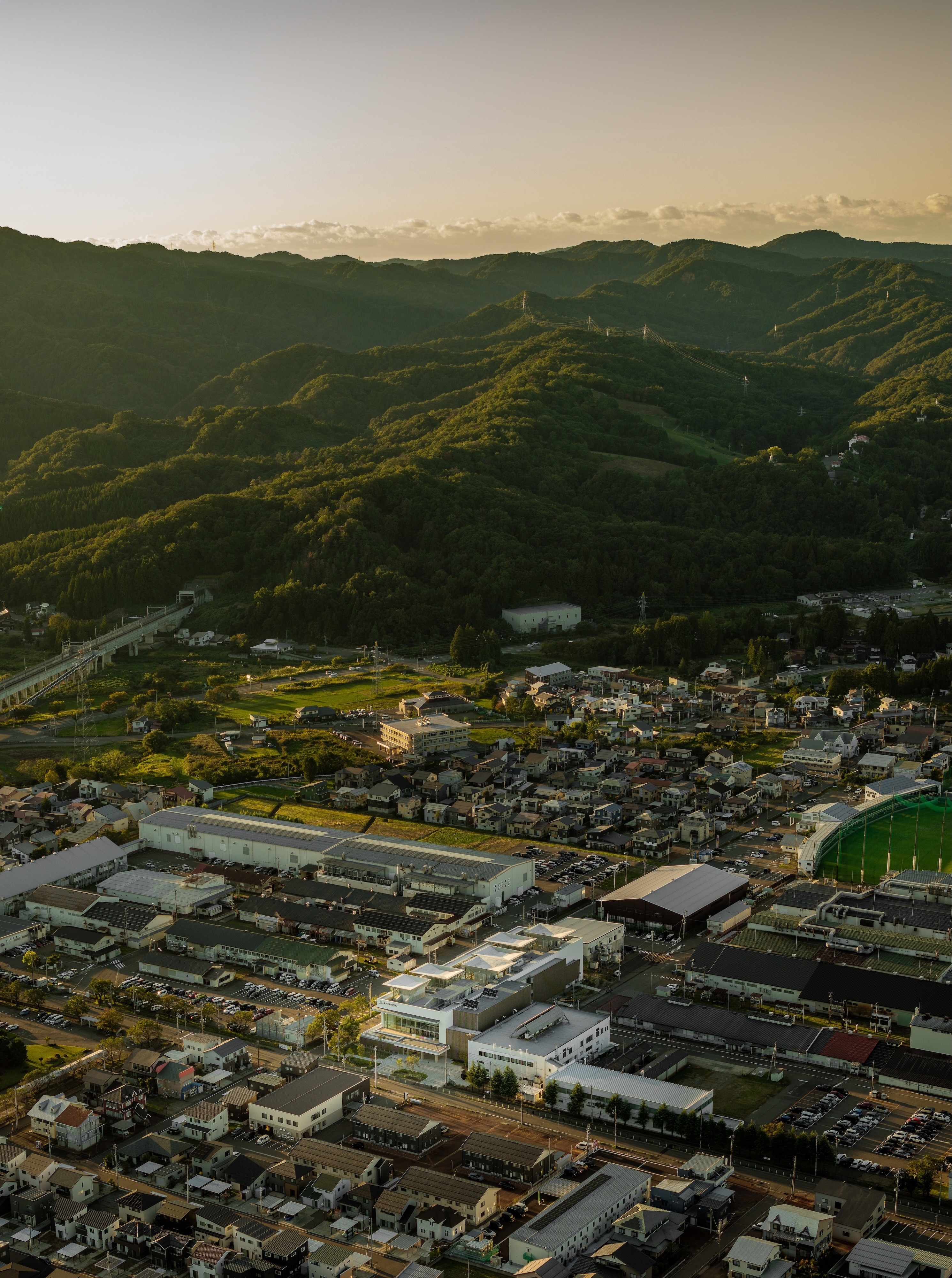
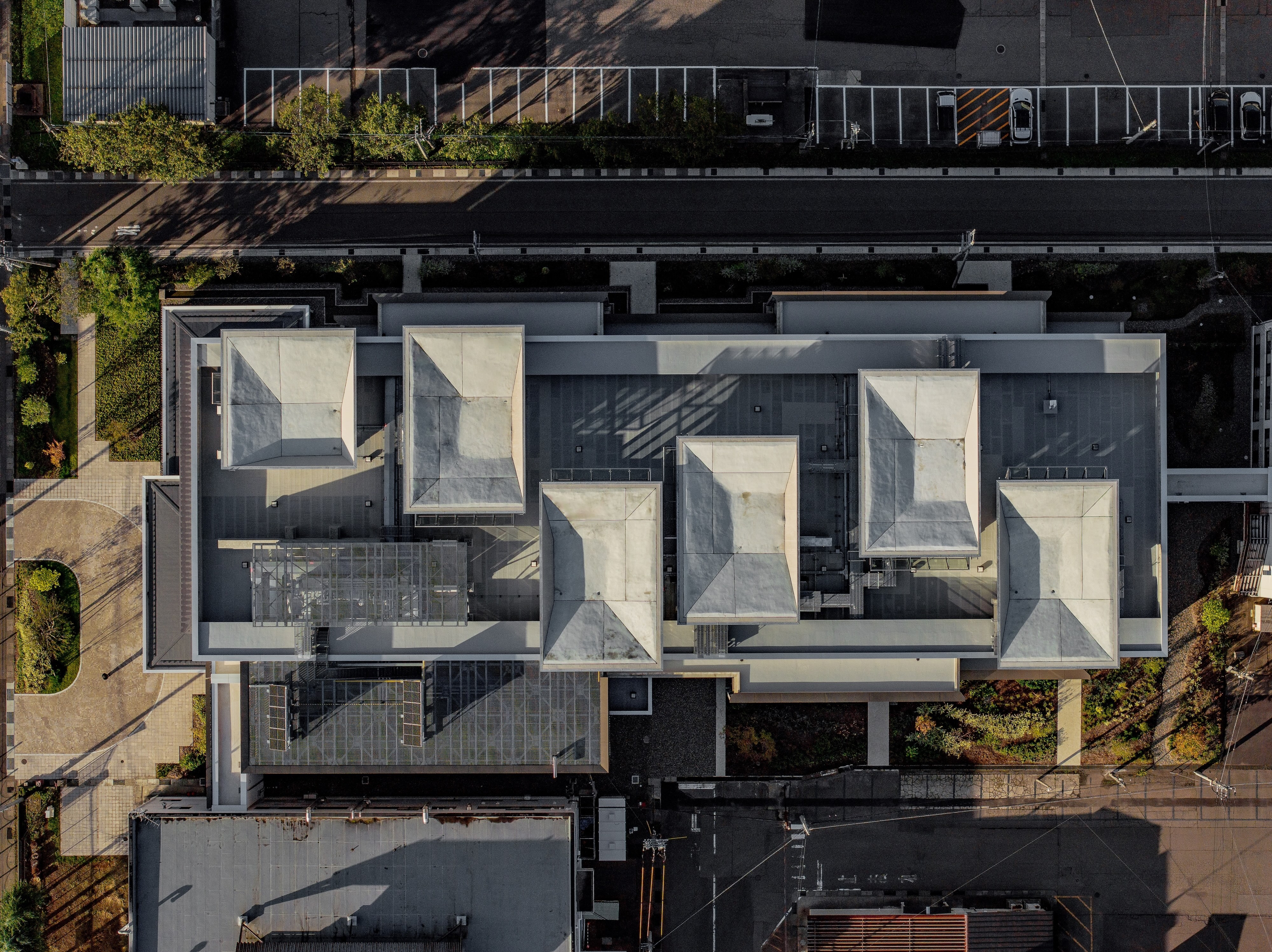
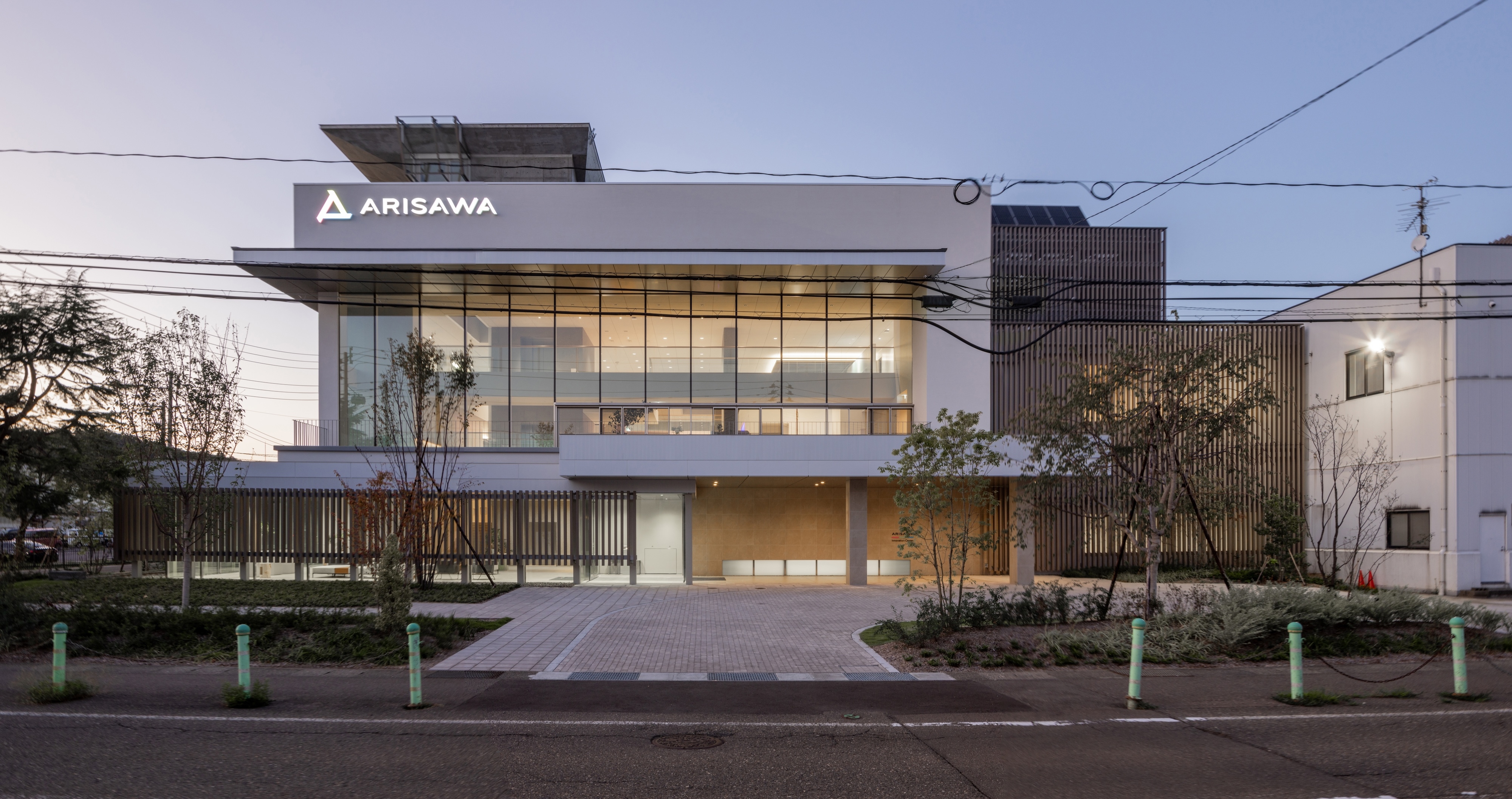
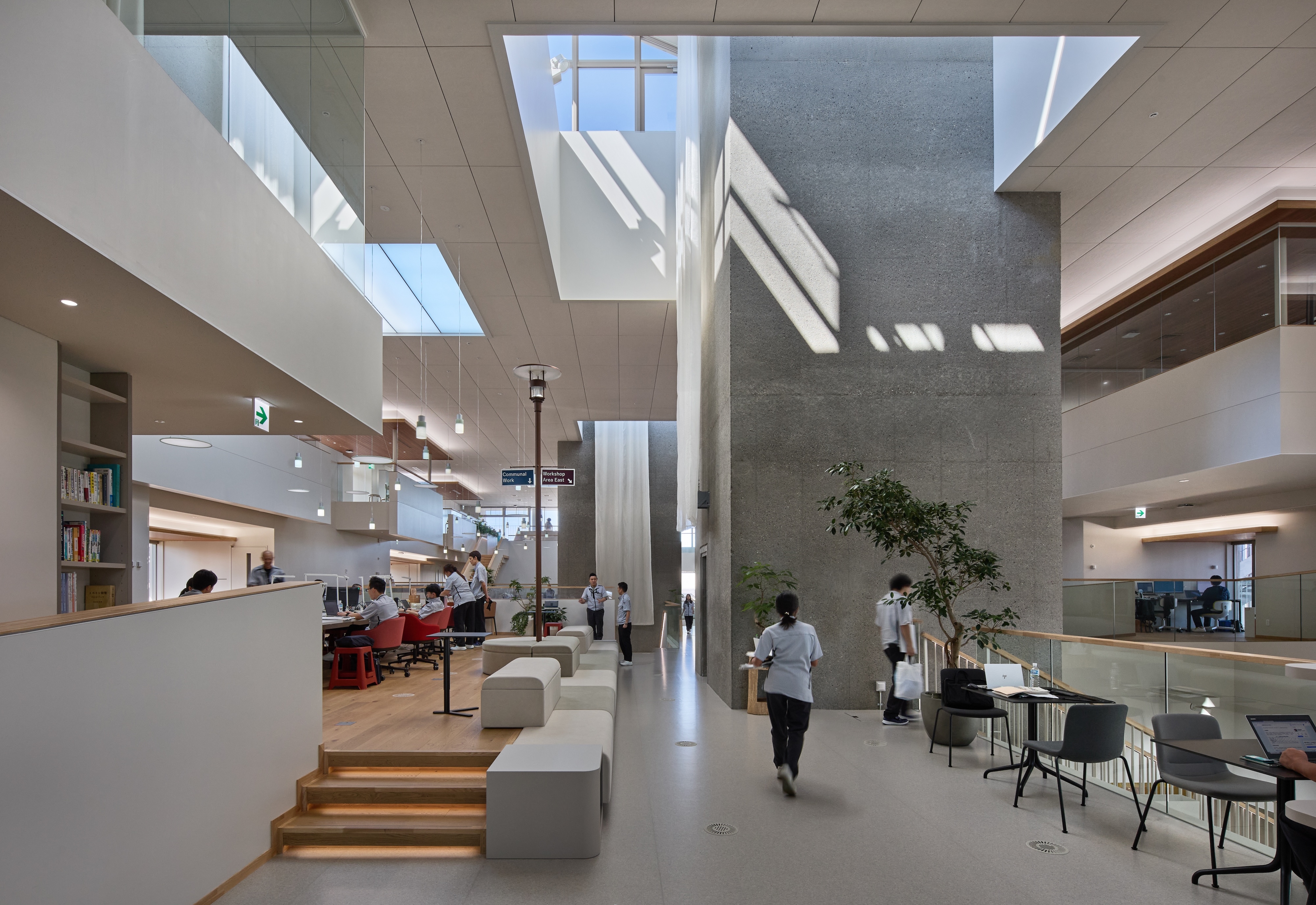
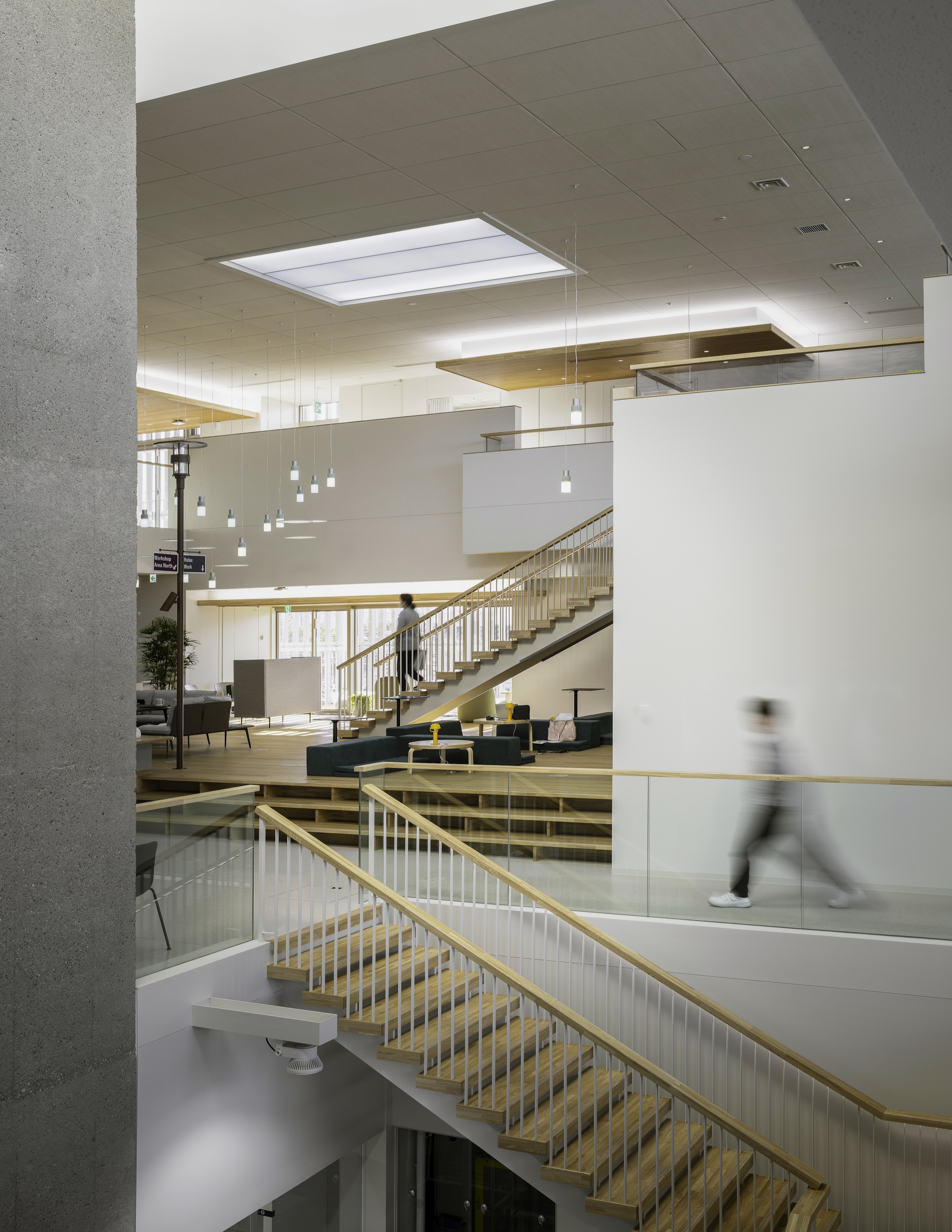
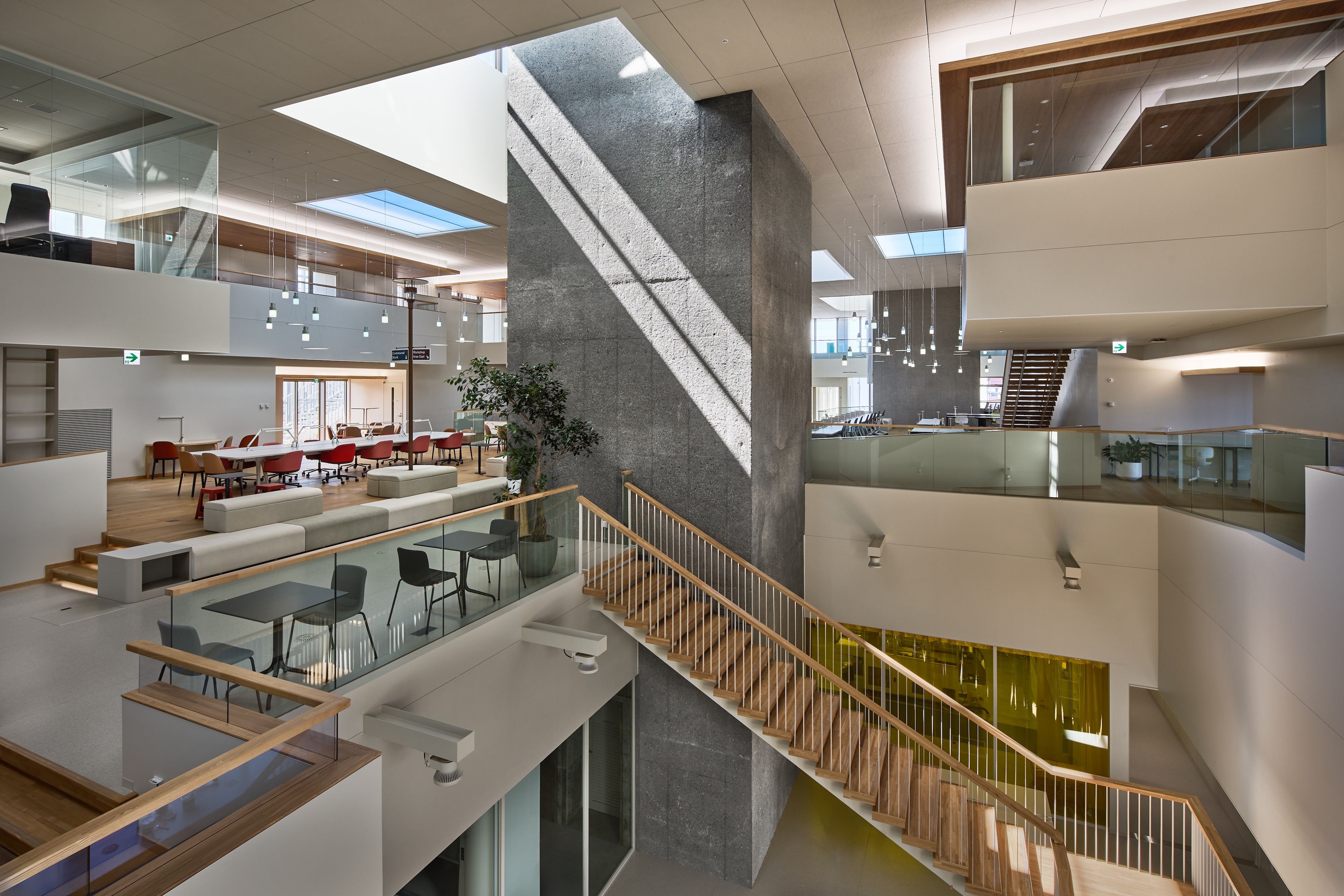
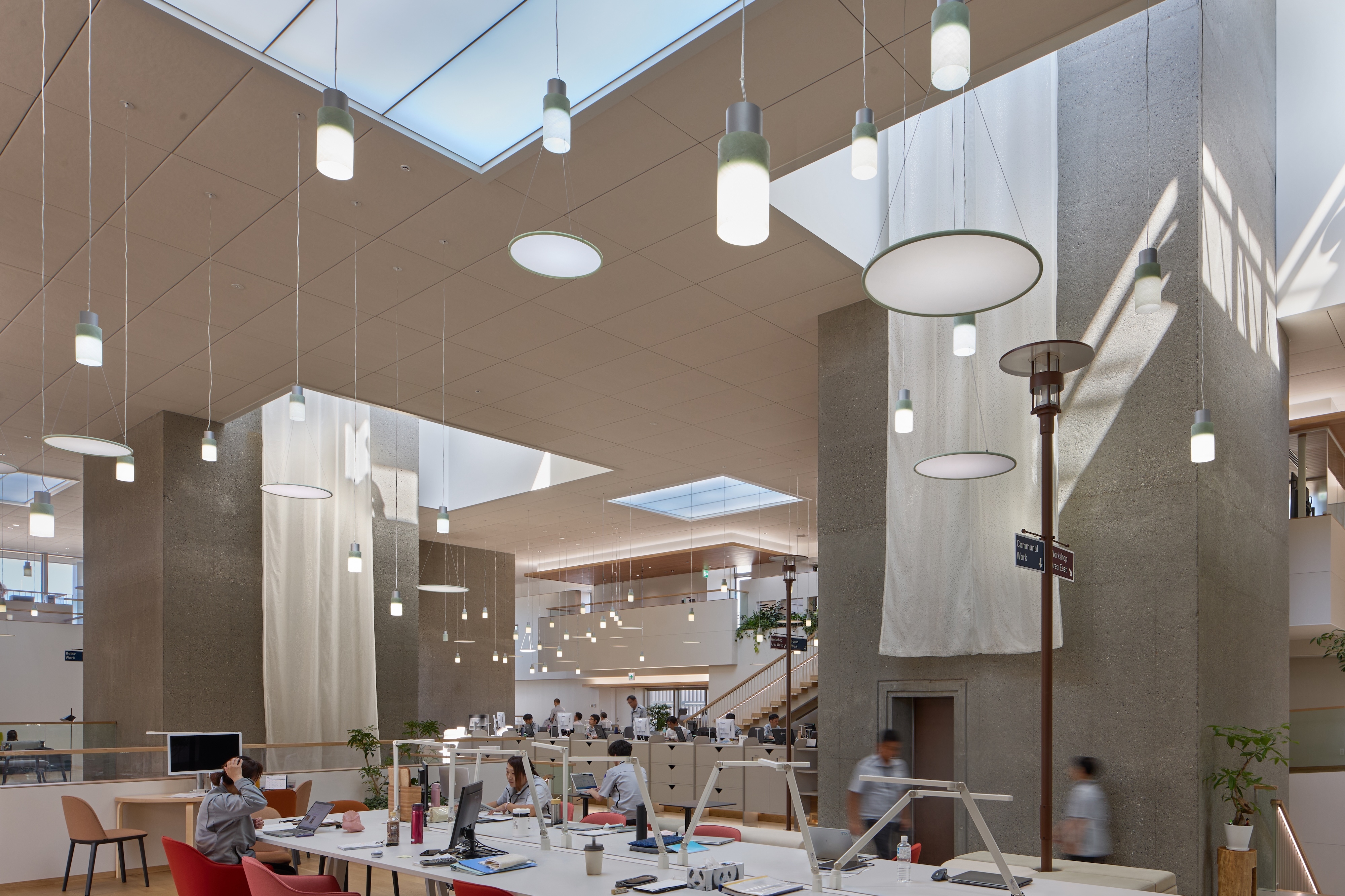
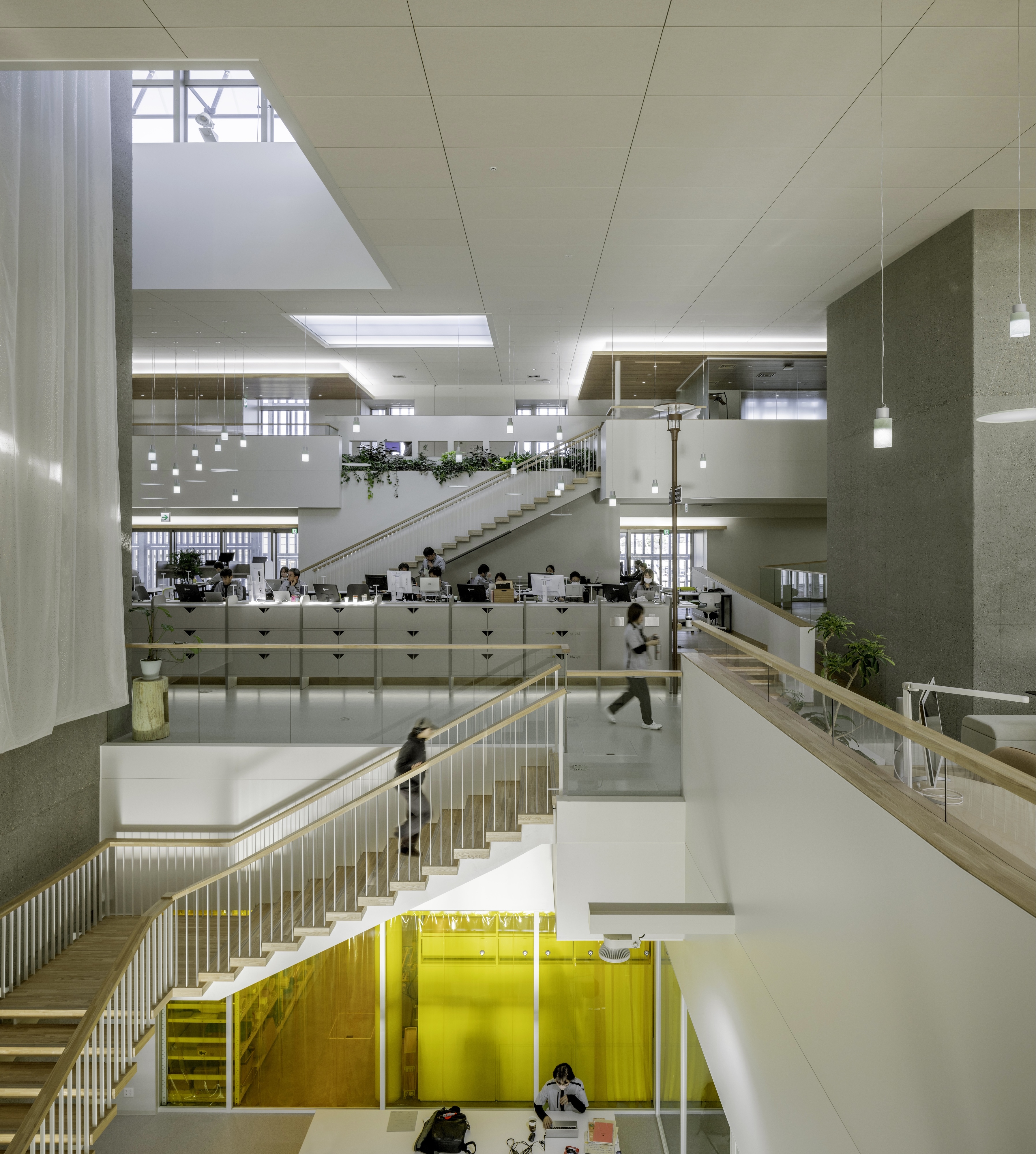
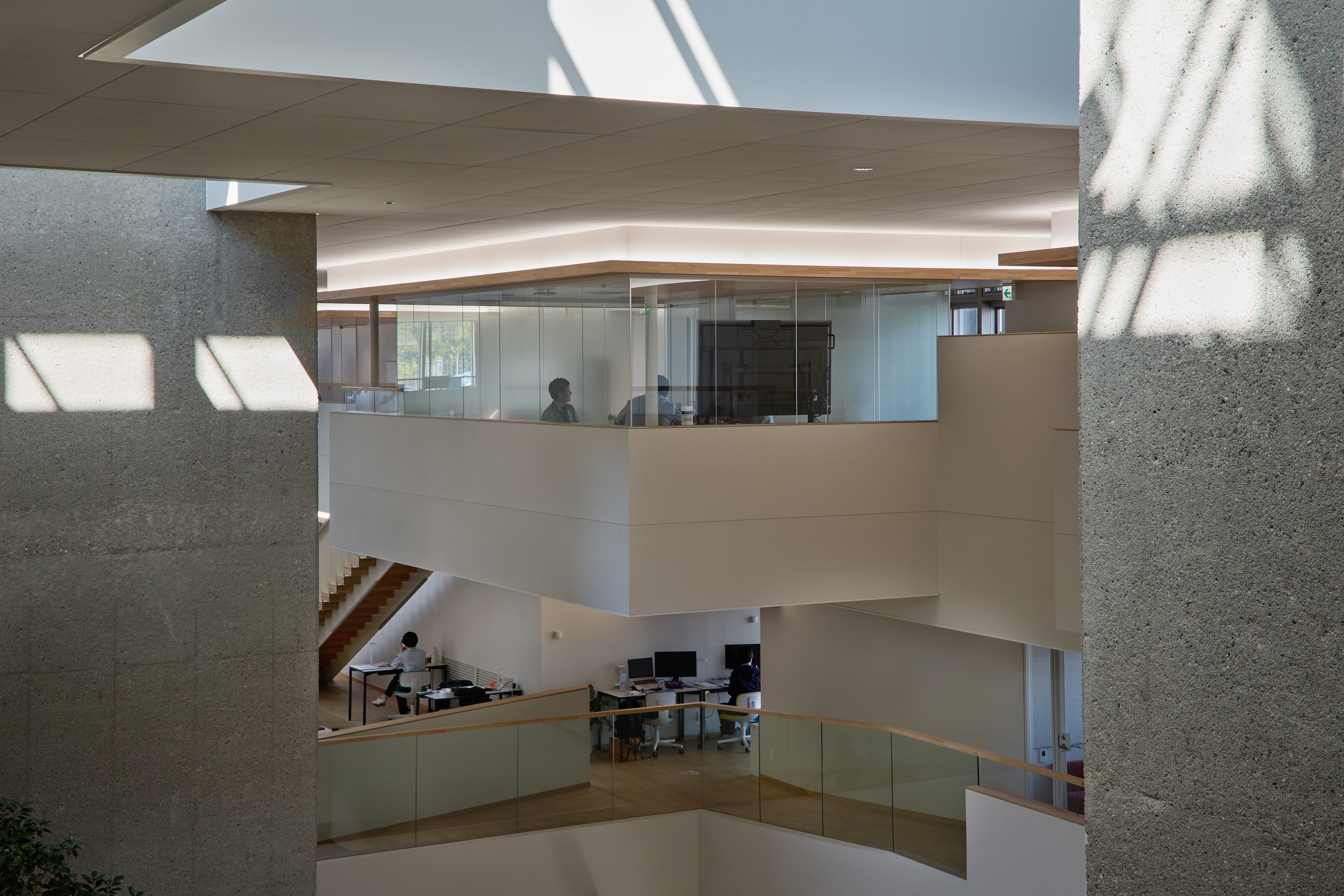
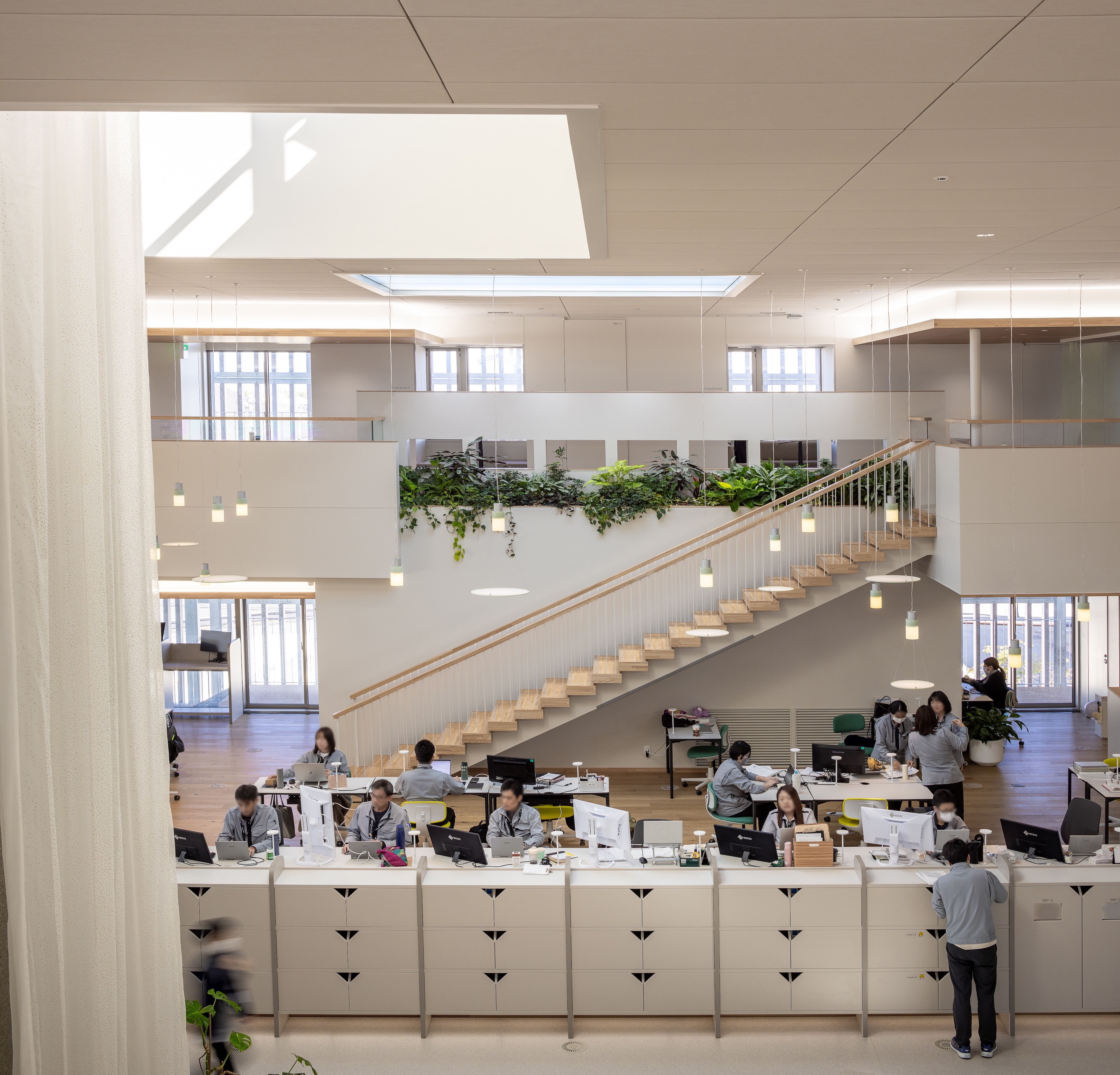
Located in a region characterized by heavy snowfall and a manufacturing landscape, the building is conceived as a living environmental system that transforms local conditions and industrial resources into integral elements of its architecture. The “Harvest Roof” harnesses snow cooling, natural light, and wind as resources. The building’s environmental systems integrate natural ventilation and factory waste heat to reduce energy consumption and create a comfortable workplace.
Rather than treating sustainability as an additional layer of technology, the project integrates environmental performance with spatial organization and everyday activities. The Harvest Roof and environmental systems work with research spaces, shared areas, and the surrounding landscape, encouraging interaction among researchers while connecting them to the local climate.
The architecture demonstrates how a research facility can respond to its environment—utilizing snow, sunlight, waste heat, and natural airflow as resources rather than constraints or waste. By connecting technology, nature, and human activity, the project proposes a resilient workplace rooted in local conditions.