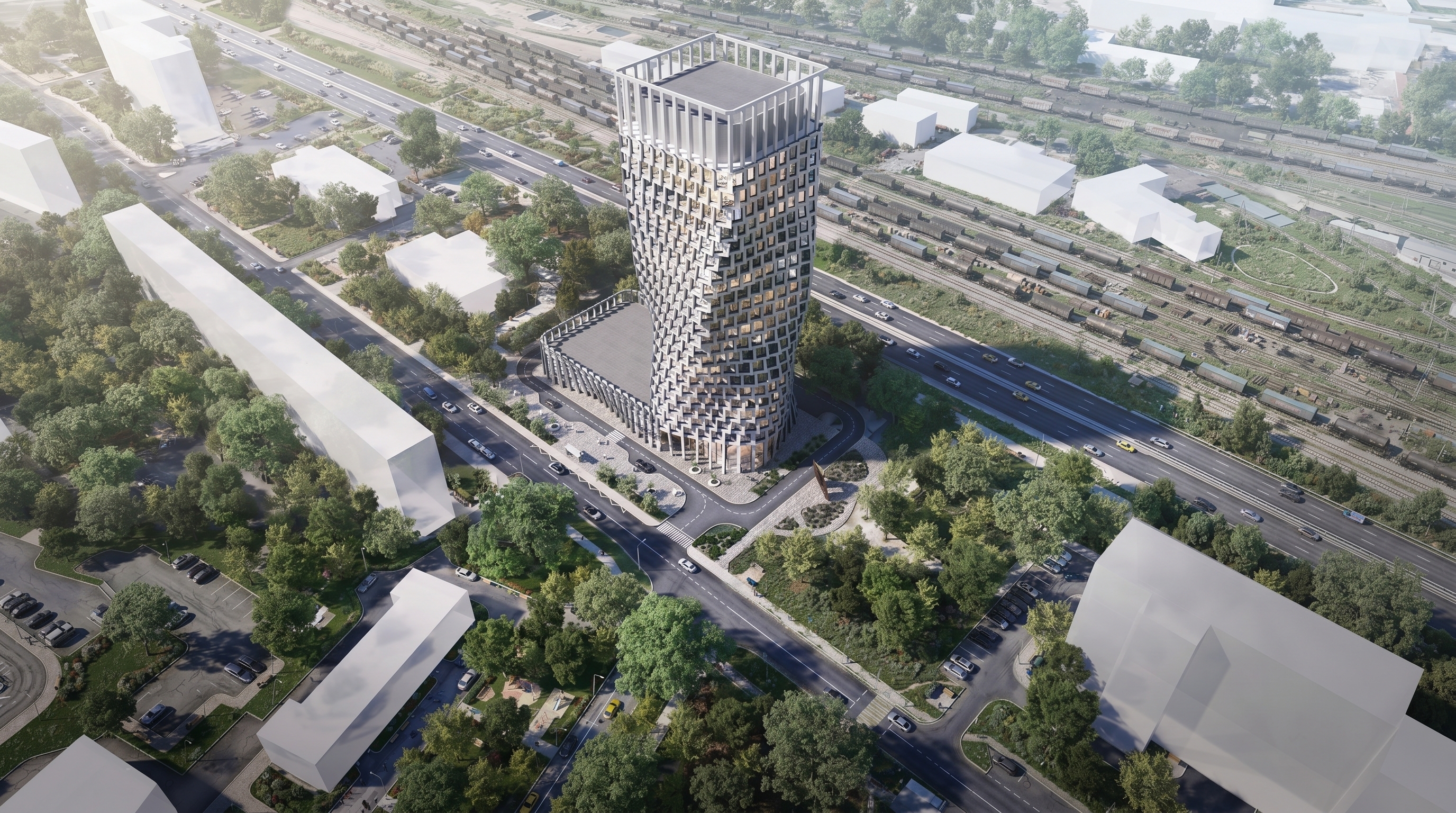
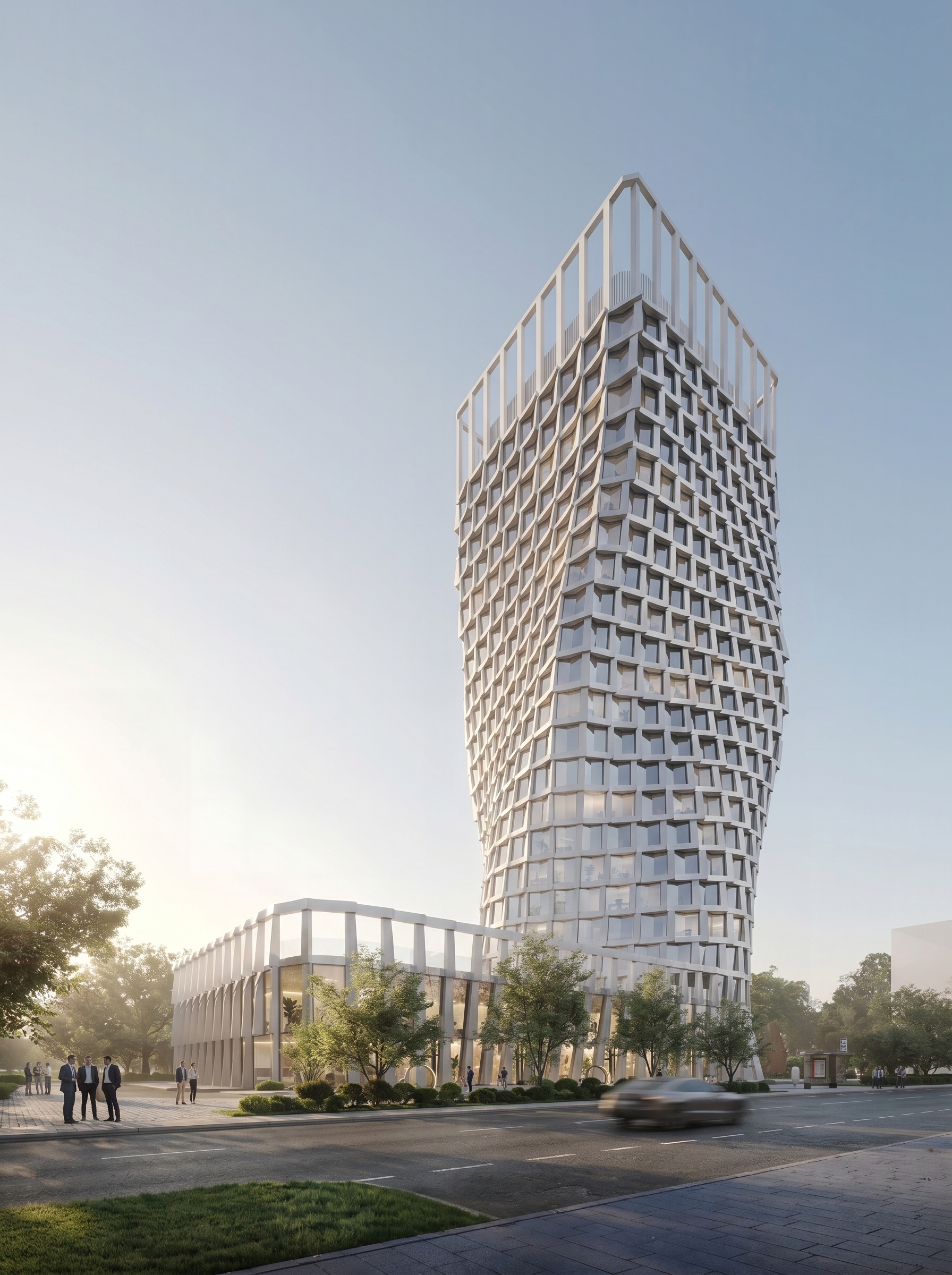
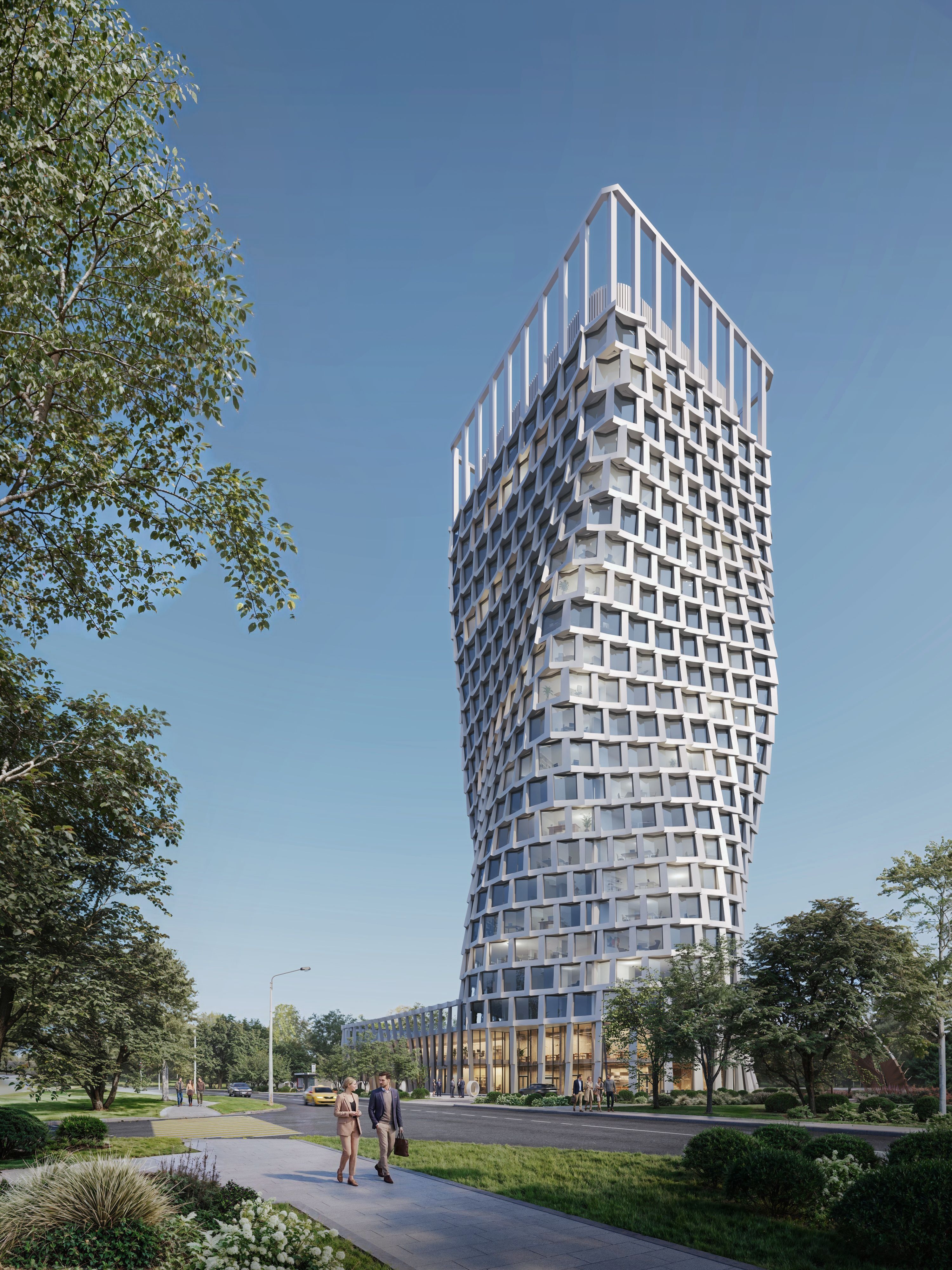
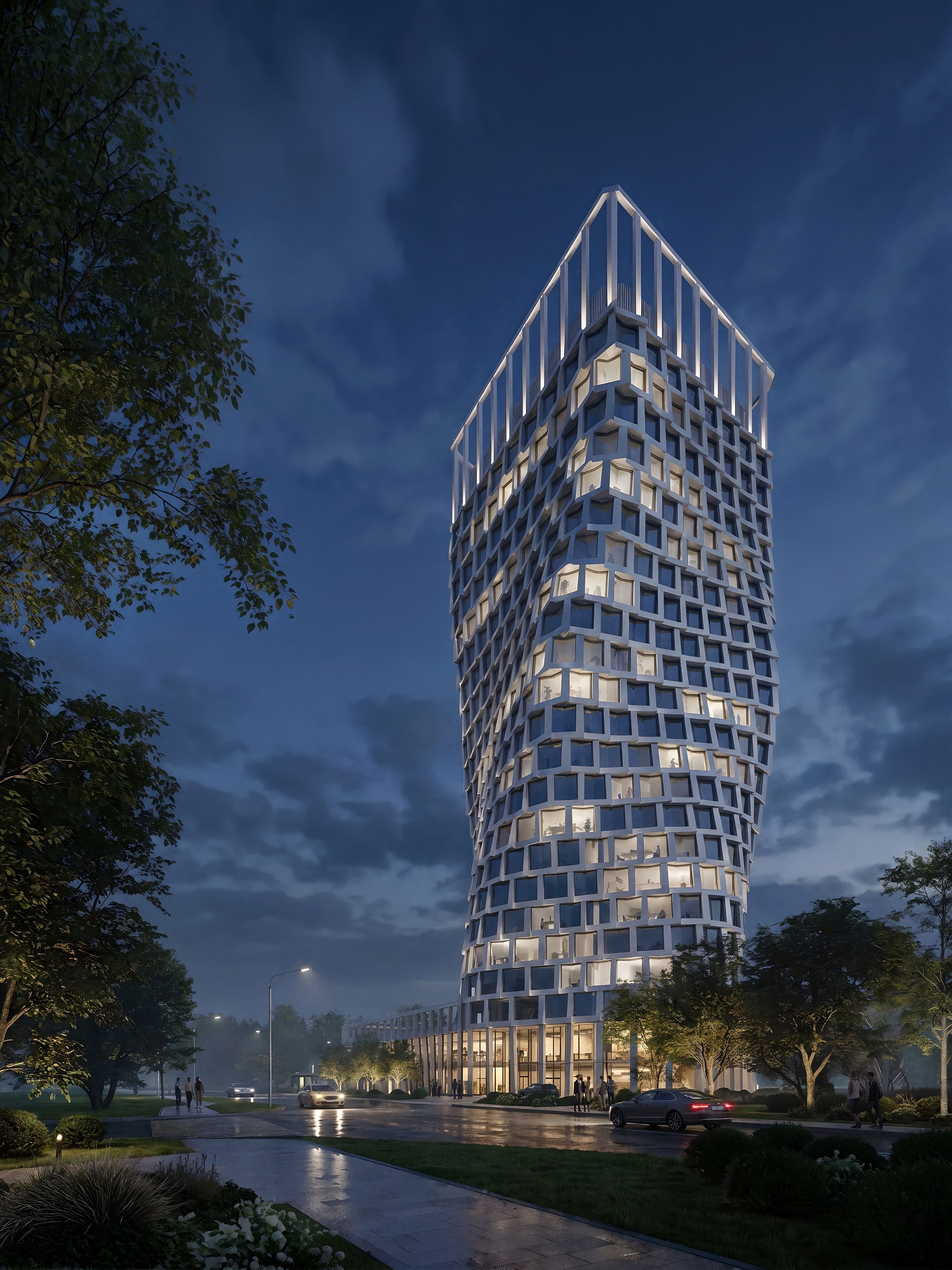
The building’s architectural identity is based on a reinterpretation of Polbina Street’s heritage through a contemporary architectural language. Rather than direct references, the theme of aviation is explored through the archetypes of aerodrome aesthetics, aerodynamics and engineering precision.
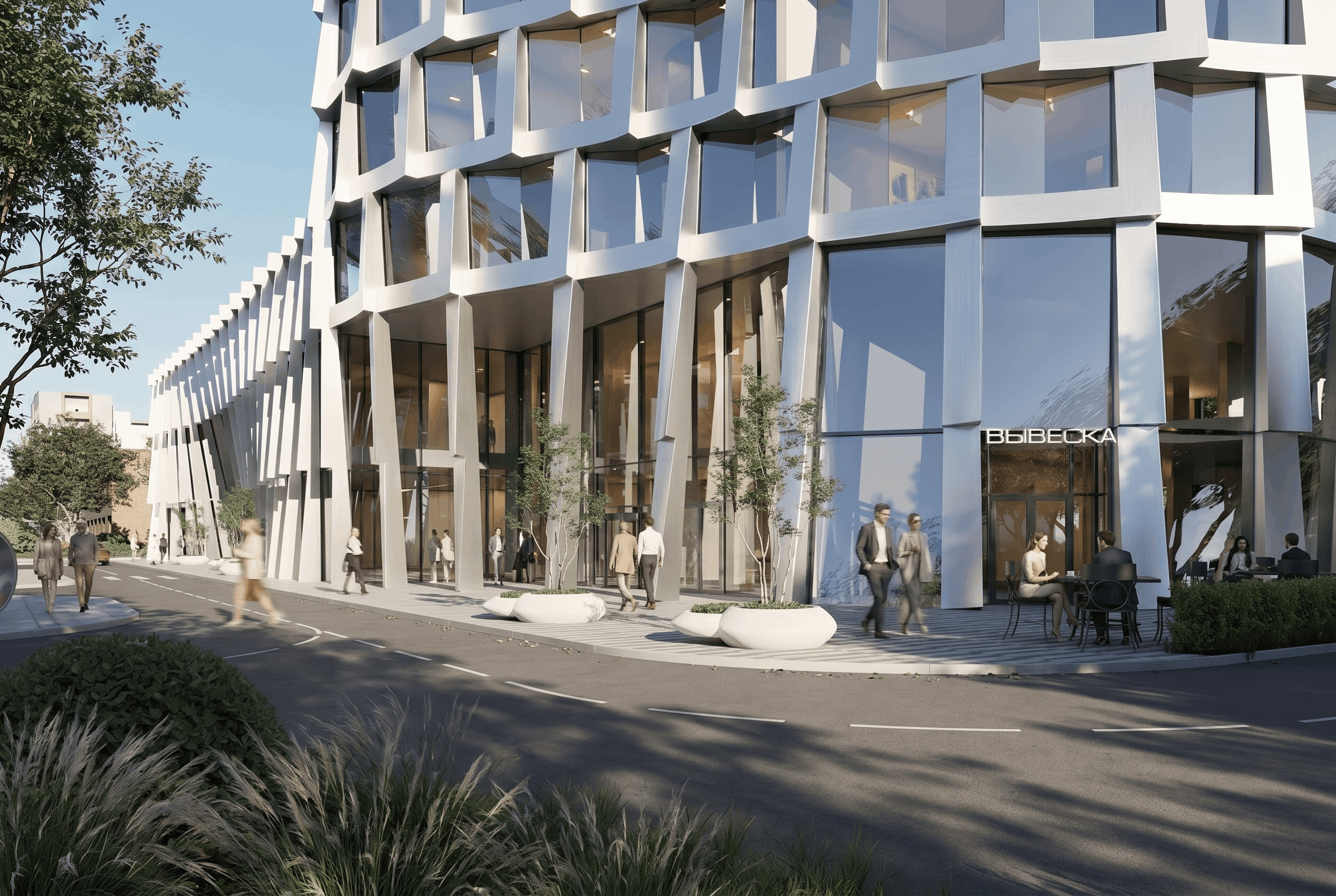
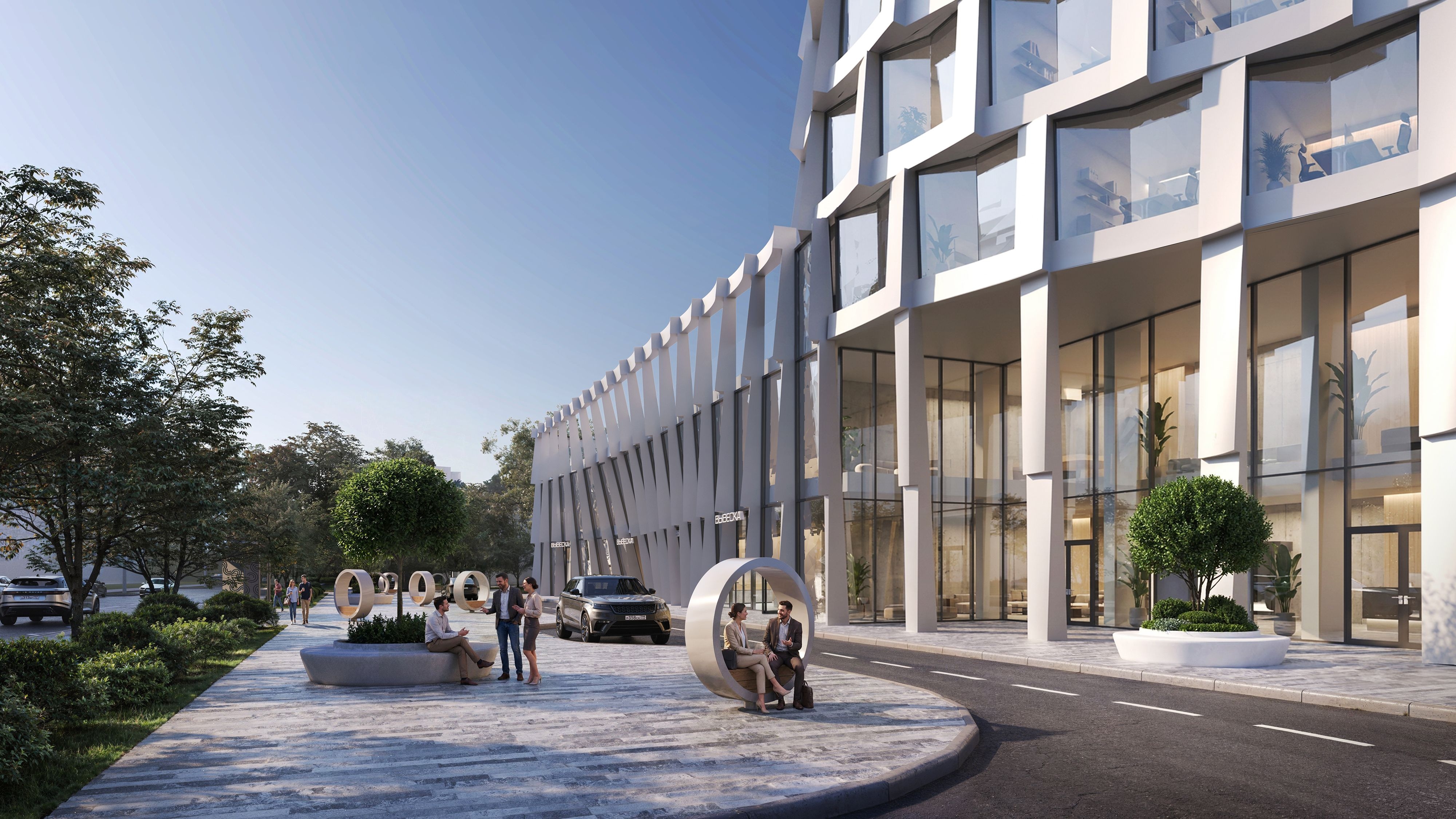
The facade is based on a modular grid, in which each element features a distinctive bevelled lower corner. This sculptural form resembles the profile of an aircraft wing and creates a sense of movement even within a static structure. The metal cladding of the facade further evokes the materials and structures of aircraft construction, reinforcing the connection with the site’s aviation history.
The tower’s form develops vertically: the lower section is more dynamic and sculptural, creating a striking visual impression at eye level, whilst the upper section gradually becomes calmer and cleaner, culminating in a light and austere crown. This technique creates a sense of upward movement and emphasises the building’s aspiration towards the sky.
As a result, the character of Polbina Street is expressed through recognisable principles of aeronautical engineering—lightness, speed and aerodynamics