
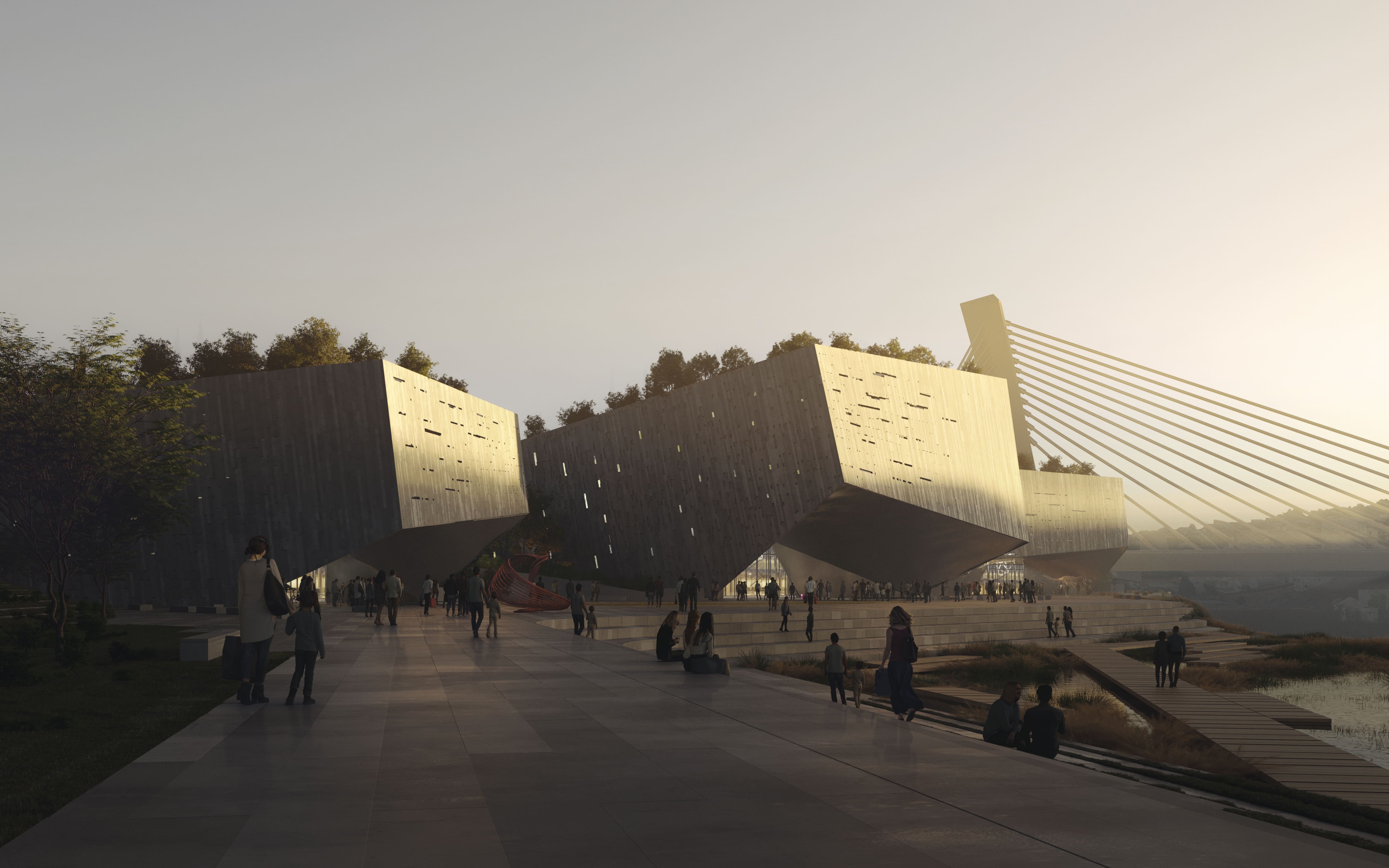
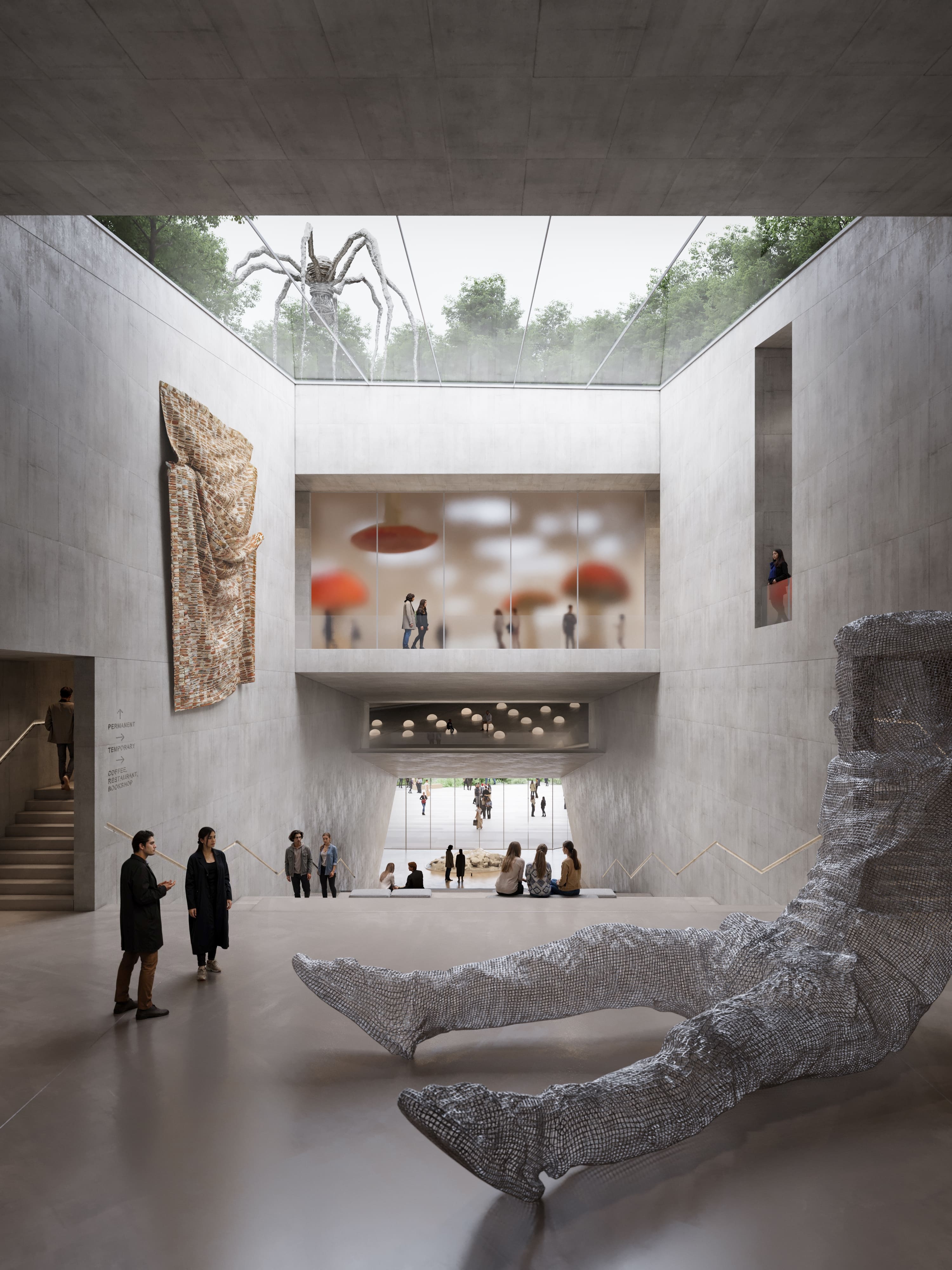
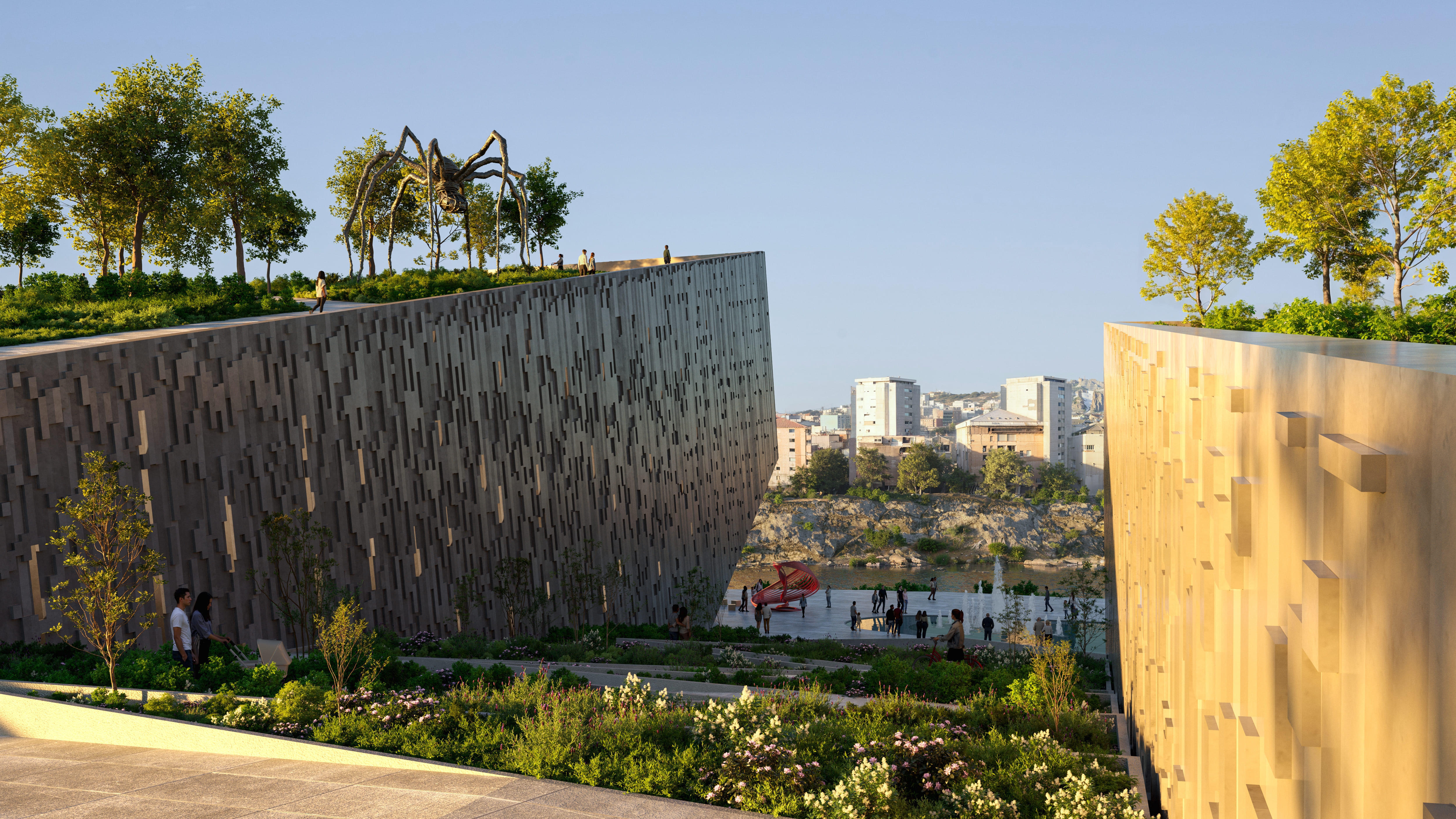
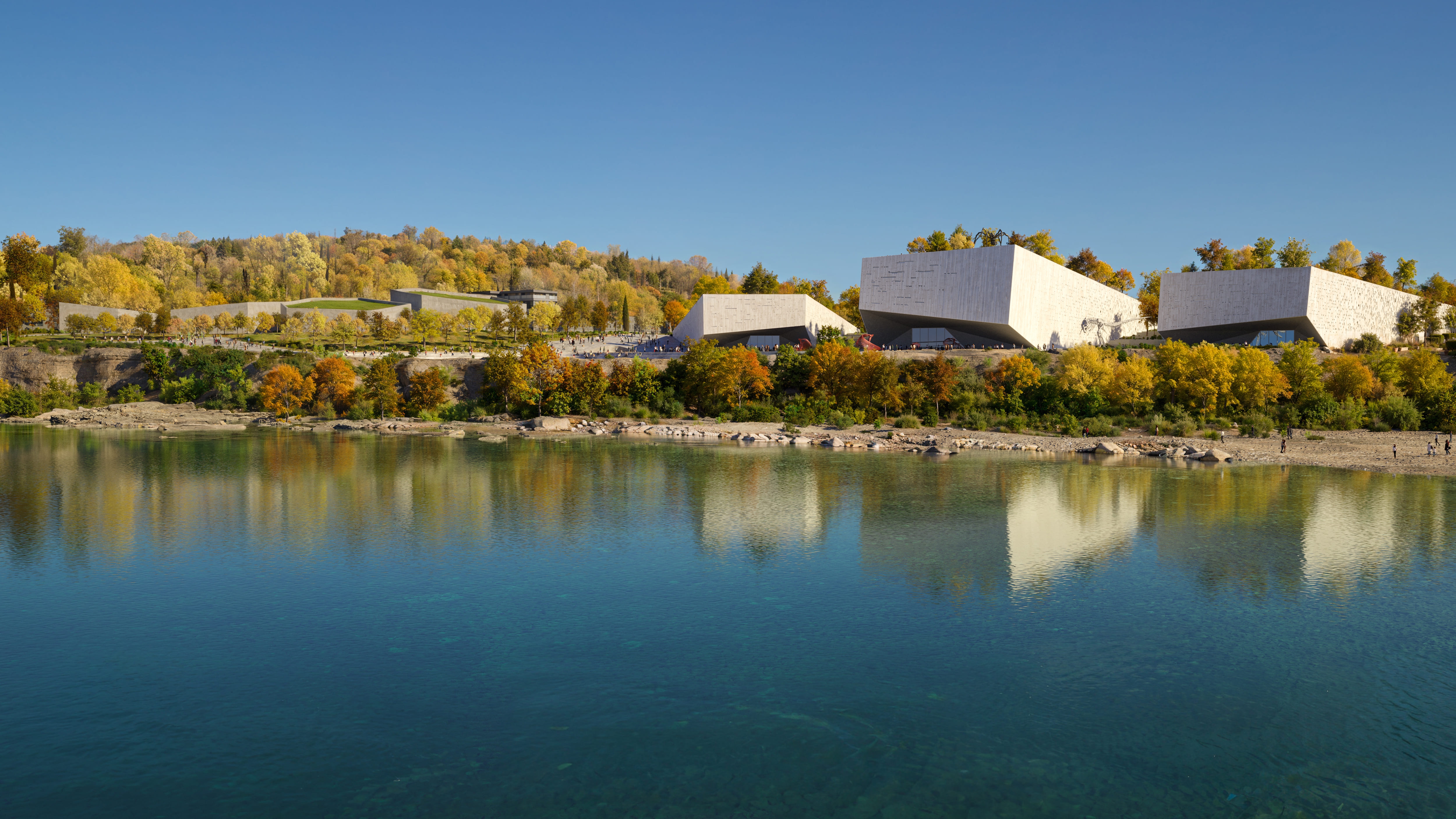
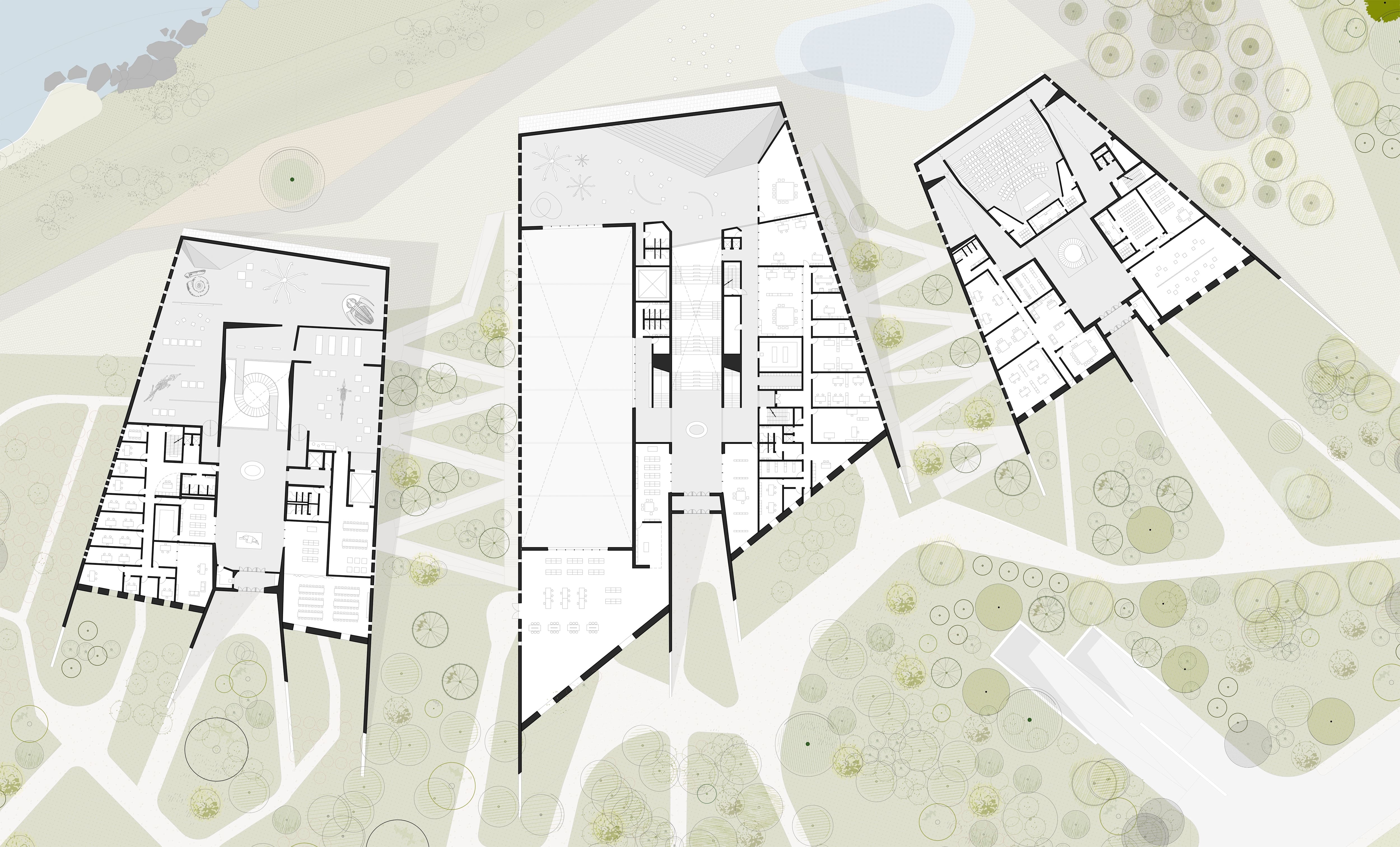
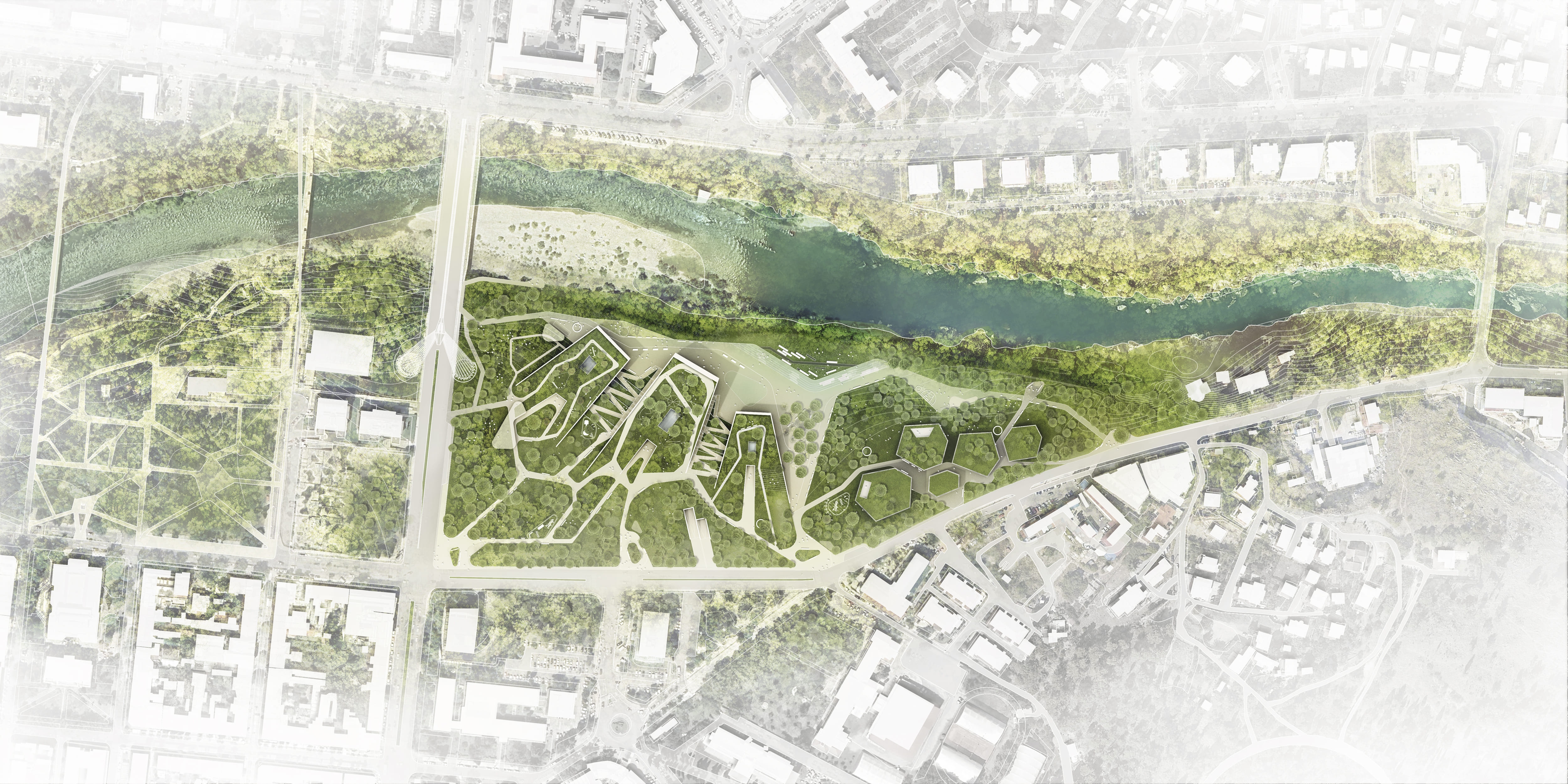
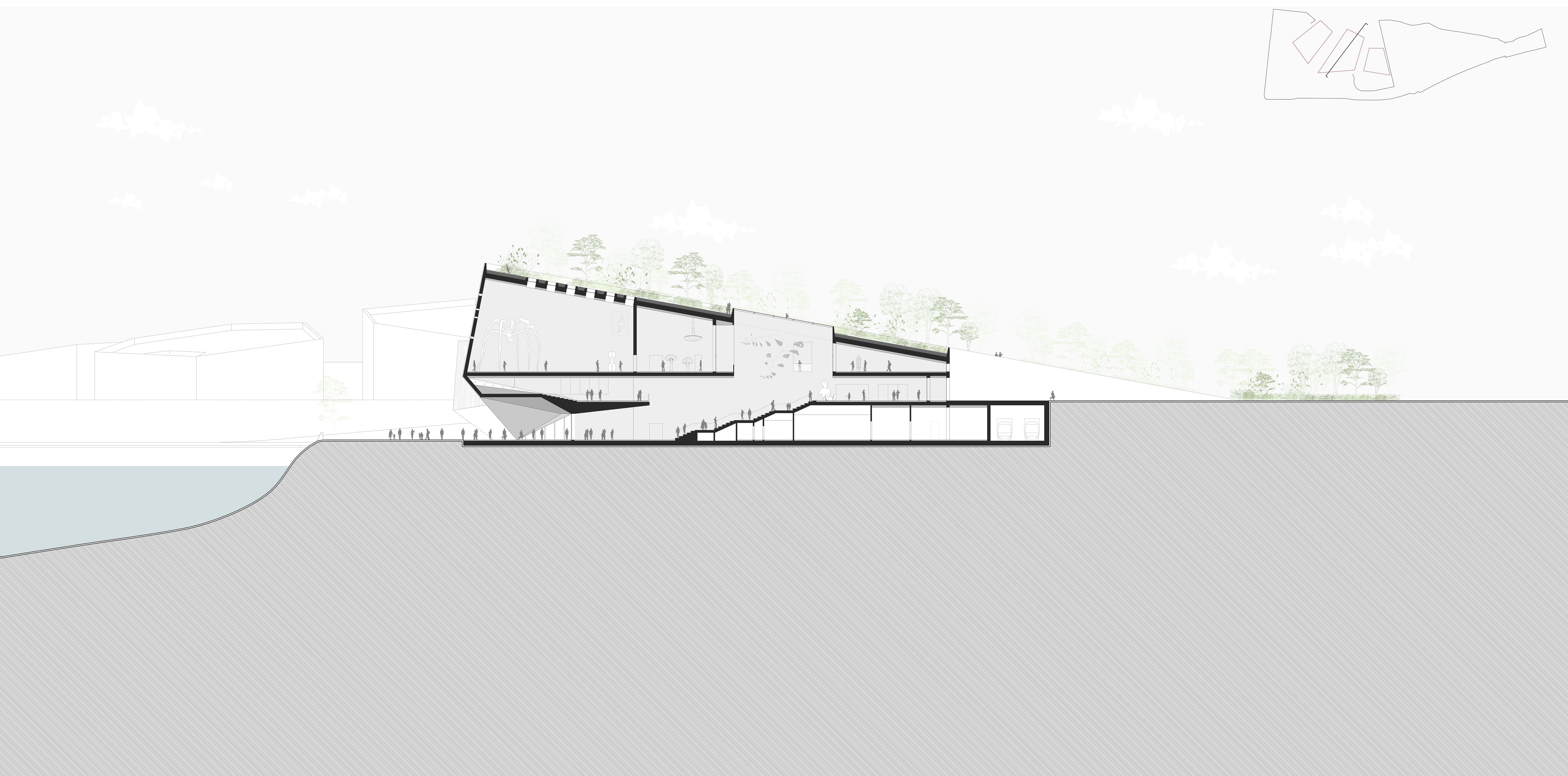
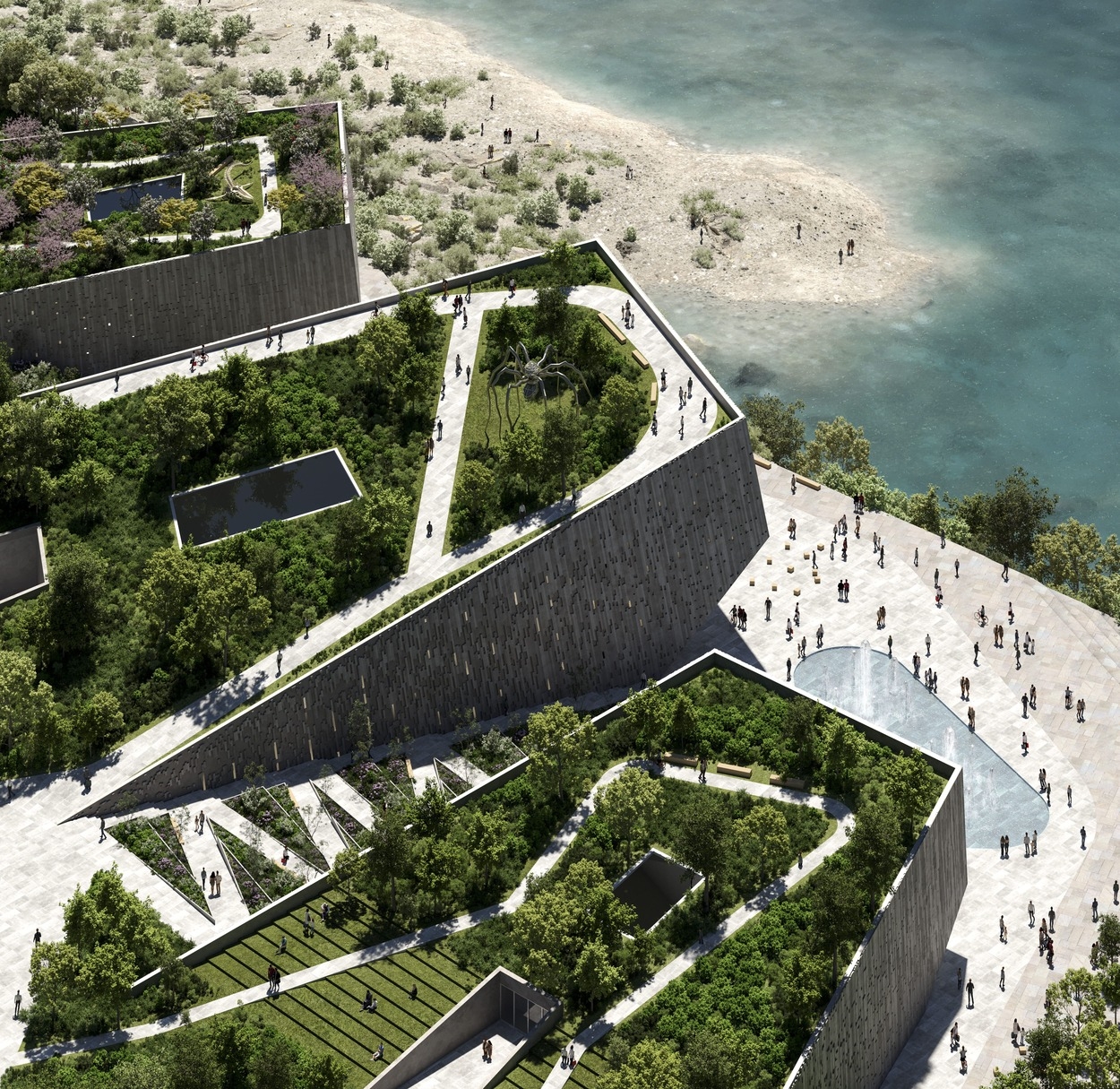
Positioned between Gorica Hill and Malo Brdo Hill, the Podgorica Museum District establishes a new Arts and Culture District along the Mora?a River. The masterplan is structured around two complementary landscapes that form a continuous ecological framework, integrating public space, architecture and topography. Three museum buildings emerge from the terrain, their stone façades echoing Montenegro's geological character while planted roofs extend the surrounding landscape across the architecture. The district accommodates the Museum of Contemporary Art, the Museum of Natural History and the House of Architecture, creating a cultural ecosystem where exhibition, research and public life coexist. Landscape strategies preserve biodiversity, improve riverfront accessibility and reinforce environmental performance. Through passive design principles, locally sourced materials and an integrated relationship between architecture and nature, the proposal defines a contemporary civic destination deeply rooted in Podgorica's environmental and cultural identity.
Bio a-fact architecture factory is an architecture and research practice.
We explore how cultural, social, and technical forces shape space, observing how places function and how architecture can thoughtfully connect with them. We read each context as a living system, shaped by tensions, constraints, and aspirations. From this understanding, we design spaces that resonate with people and endure through time. Our work grows from collective intelligence – architects, engineers, and researchers thinking together, combining analytical clarity with intuitive insight.